Health spending: when out-of-pocket costs push households into poverty
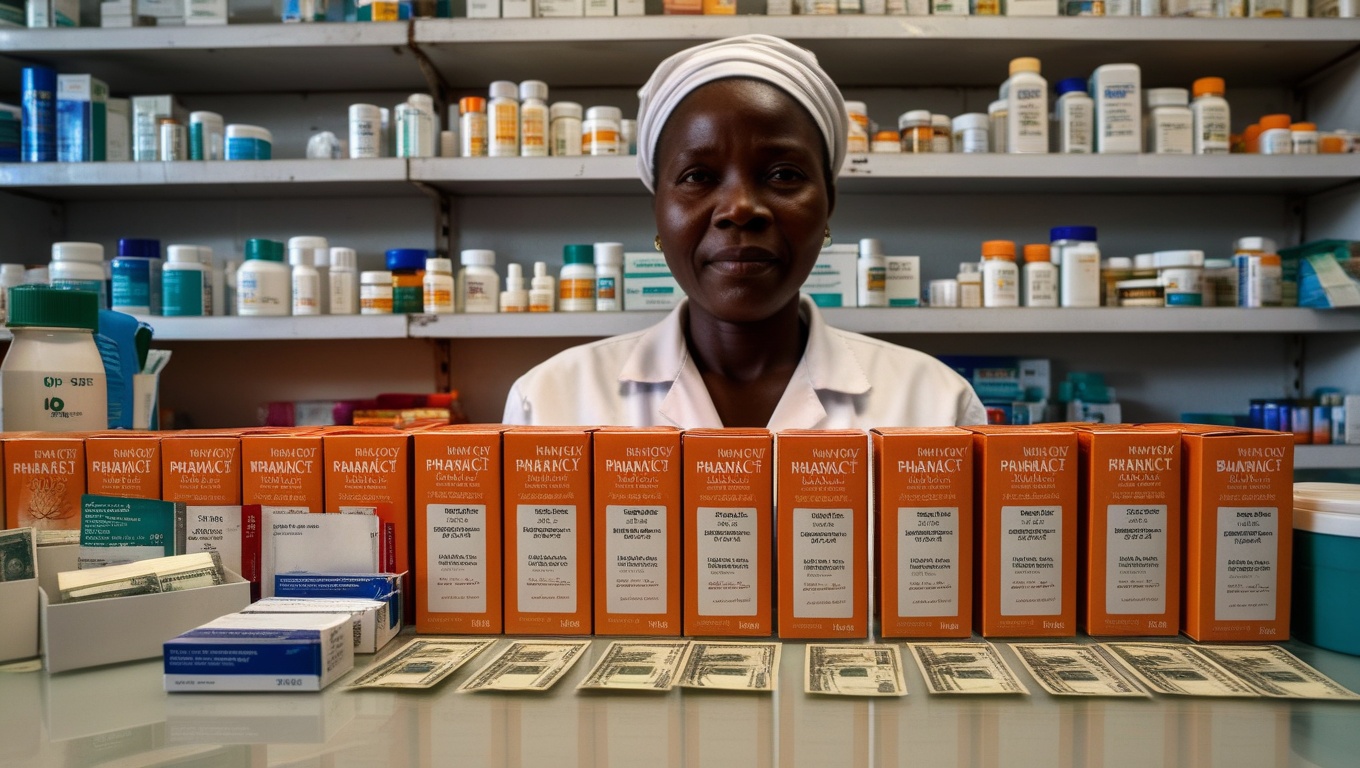
Across much of West Africa, the first barrier between a sick person and a caregiver is neither distance nor a shortage of doctors: it is the payment counter. With insufficient public funding and no large-scale risk-pooling, households settle the bill themselves, directly, in cash, at the very moment when illness has already eaten into their income. The result is a paradox the region's health systems have yet to resolve: the very act meant to protect life becomes one of the leading drivers of impoverishment. According to the World Health Organization, close to 152 million people were pushed into or deeper into poverty by direct health costs in the African Region in 2019, half of all people impoverished by health worldwide.
Structural underfunding of health systems
The starting point is the scarcity of resources. In 2023, current health spending per capita ranges from 26.01 USD in Niger, the lowest level in the region, to 87.68 USD in Côte d'Ivoire. Benin stands at 46.53 USD per capita, behind Senegal (73.23 USD), Burkina Faso (71.73 USD), Ghana (70.26 USD) and Nigeria (66.82 USD). These amounts remain far below the thresholds needed to deliver a quality essential package of care. For reference, the WHO estimates average health spending in Africa at around 35 USD per person per year, against several thousand dollars in high-income countries. The more than threefold gap between Niger and Côte d'Ivoire is also a reminder that the region is not a single bloc: behind the average lie sharply contrasting national trajectories.
Out-of-pocket costs, the Achilles heel of financing
Beyond the volume, it is the composition of financing that poses the problem. What distinguishes a protective system from a fragile one is not only how much is spent, but who pays and when. In 2023, the share of health spending borne directly by households peaks at 71.9% in Nigeria and 64.34% in Togo. Niger (51.48%), Mali (47.23%), Senegal (44.33%), Burkina Faso (43.82%) and Benin (42.41%) remain at high levels. Only Ghana (26.68%) and Côte d'Ivoire (31.99%) fall below one third, reflecting more advanced prepayment and pooling efforts.
The WHO considers that a system provides satisfactory financial protection only once out-of-pocket costs fall below 15 to 20% of current spending. By that yardstick, almost every country in the region remains in the danger zone: direct payment is the main source of health financing where it should be the exception. When payment at the counter dominates, every episode of illness becomes a potential financial shock, and the poorest must choose between getting care and feeding themselves.
No health system can protect its people when it is the sick themselves who bear the bill at the moment of care.
Out-of-pocket cost is not inevitable: the Rwandan lesson
It is often said that the weight of direct payment is the inevitable consequence of poverty: a poor country could not fund its health system any other way. Rwanda's experience flatly contradicts that idea. With per-capita income comparable to several West African countries, Rwanda built over two decades a community-based health insurance scheme, the Mutuelles de santé, that today covers a majority of the population. According to Rwanda's National Institute of Statistics, health insurance coverage reached around 93% of the population in 2022.
The result shows in the financing structure: Rwandan out-of-pocket spending, above a quarter of expenditure at the turn of the 2000s, has been brought down to around a tenth of current health spending. In other words, at a comparable level of wealth, an institutional choice, making prepayment near-universal, more than halved the weight of the counter. The comparison with Ghana is just as telling within the region: its National Health Insurance Scheme (NHIS), created in 2003, covers around 40% of the population and has helped bring out-of-pocket costs down to 26.68%, the lowest in West Africa. The message is clear: out-of-pocket cost is a policy choice, not a geographical given.
Yet the Rwandan example is not a flawless model, and that is precisely what makes it instructive. Studies of the Mutuelles show that protection first benefited the less-poor households, more inclined to contribute, before targeted subsidy mechanisms were introduced to catch up the poorest. The lesson for West Africa is twofold: generalizing prepayment massively reduces out-of-pocket costs, but without explicit subsidy of the poorest households' contributions, insurance can, at first, reproduce the very inequalities it aims to correct. The design of the scheme matters as much as its principle.
Understanding the mechanisms: why the counter prevails
If direct payment dominates, it is because it fills the space left vacant by the other sources of financing. The breakdown is instructive. First, public budget commitment remains weak: despite the 2001 Abuja Declaration, by which African states pledged to devote 15% of their national budgets to health, only two countries on the continent, Cabo Verde and South Africa, still met that target in 2021. Second, mandatory prepayment mechanisms, insurance and pooling, remain embryonic and struggle to enroll the informal sector, which makes up the bulk of regional employment. Third, external financing, volatile by nature, does not durably substitute for a stable public base.
These three shortfalls compound and leave the household as the adjustment variable. The chart below illustrates this logic: when public spending and prepayment recede or stagnate, the share falling on the counter rises mechanically.
- Budget commitment: the Abuja target of 15% of national budgets remains out of reach for almost every country in the region; only Cabo Verde and South Africa met it in 2021.
- Insufficient pooling: without mandatory schemes covering the informal sector, the risk of illness is not shared and falls on each household in isolation.
- Dependence on external aid: volatile financing that does not build a lasting base.
- Crowding-out effect: with stagnant public spending, any rise in care needs translates into a rise in out-of-pocket costs.
The case of Benin: an unstable trajectory
Benin's recent history illustrates the difficulty of durably reducing out-of-pocket costs. After a low point of 41.53% in 2012, the household share of health spending climbed back to 55.37% in 2021, at the peak of health-system strain. The decline seen in 2022 (49.11%) and then in 2023 (42.41%) brings the country close to its 2010 level (43.39%). This recent shift is encouraging, but the volatility of the series, which swings by nearly fourteen points over the period, is a reminder that a cyclical decline is not the same as structural financial protection. As long as the budget priority given to health does not rise, these gains remain reversible.
The cost of inaction: from spending to poverty
Doing nothing has a price, and it is measured in lives pushed into poverty. In the WHO African Region, the number of people facing catastrophic health spending, meaning more than 10% of the household budget, rose from 52 million in 2000 to roughly 95 million in 2019, an increase of about 2.5 million people per year. In all, direct payment places a financial burden on more than 200 million people in the region. If the trend holds, millions more households slip into catastrophic spending every year.
For a modest family, a hospital stay, a caesarean section or a chronic treatment can absorb the equivalent of several months of income, forcing debt, the sale of productive assets (land, livestock, tools) or the forgoing of care. These impoverishment mechanisms are not reversible: a field sold to pay for treatment is not bought back with recovery. Health, meant to protect, then becomes an accelerator of poverty that propagates its effects across a generation.
The cost of inaction is not confined to households, moreover. Forgoing care, the first adjustment variable when the counter becomes insurmountable, erodes human capital: untreated illnesses that become chronic, preventable maternal deaths, children pulled out of school to fund a treatment. This silent erosion weighs on productivity and growth, and ends up costing the economy far more than upfront financial protection would have. Postponing the reform of health financing means accepting a deferred bill, a heavier one, paid in years of life and lost human potential.
What national averages hide
National figures, however useful, smooth over a deeply unequal reality. A national out-of-pocket share of 42% says nothing about its distribution: it can mask a partially insured urban class alongside a rural population paying almost all its care out of pocket. Likewise, the same absolute amount does not represent the same effort for a top-decile household and for a subsistence household. It is precisely in the places the average conceals, remote rural areas, the informal economy, women of childbearing age, that catastrophic spending and impoverishment concentrate.
This is CRAD's conviction: you do not steer a financial-protection policy with a national average. It takes a fine-grained measure, disaggregated by income quintile, place of residence and sex, and ideally geolocated, to know where the counter does the most damage and concentrate public effort where it protects the most lives per franc spent. A well-designed household-expenditure survey turns an abstract aggregate into an operational map of vulnerability, and changes the decision.
The gender angle: the hidden cost of motherhood
Out-of-pocket costs hit women unequally, because motherhood concentrates mandatory and often urgent spending. Several studies on the region document this: in Mali, despite an official policy of free caesarean sections, a study in the Kayes region shows that 91% of women still paid for their care, at an average cost of around 163 USD per episode. In Burkina Faso, the median direct cost of a caesarean was estimated at around 136 USD despite an exemption policy. In Nigeria, around 66% of women report paying out of pocket for delivery, by caesarean as well as vaginal birth.
These gaps between announced free care and the free care actually experienced are revealing: an exemption decreed at the central level does not automatically translate into free care at the counter, for want of financing and monitoring. For already-fragile households, an uncovered emergency caesarean can be enough to trigger catastrophic spending. This is an area where disaggregated measurement and rigorous monitoring and evaluation of exemption policies directly change the fate of mothers and newborns.
The shortfall in public commitment, the root of the problem
All these dynamics converge on a single cause: insufficient public commitment. The Abuja Declaration had set a clear target, 15% of national budgets for health. Nearly a quarter of a century later, the vast majority of states remain far from it, and the budget priority given to health has even fallen in some countries. As long as public funding and mandatory prepayment mechanisms fail to scale up, out-of-pocket costs will remain the adjustment variable, borne by the households least equipped to absorb them. The Rwandan and Ghanaian experiences prove that another path exists: it requires a political decision sustained over time, and a measurement apparatus capable of steering it.
Key takeaways
- In 2023, households financed from 26.68% (Ghana) to 71.9% (Nigeria) of health spending in West Africa; no country reaches the WHO's recommended protection threshold (15 to 20%).
- The weight of the counter is not inevitable: at comparable income, Rwanda raised insurance coverage to around 93% and brought out-of-pocket costs down to roughly a tenth of spending.
- Close to 152 million people were impoverished by direct health costs in the WHO African Region in 2019, half of all people impoverished by health worldwide.
- Catastrophic spending (more than 10% of the household budget) nearly doubled, from 52 million people in 2000 to roughly 95 million in 2019.
- National averages mask pockets of impoverishment: only disaggregated measurement (income, residence, sex) reveals where out-of-pocket costs destroy the most human capital.
Recommendations to West African decision-makers
- Enshrine the Abuja target in a multi-year health programming law, with a year-by-year costed trajectory and quarterly publication of budget execution.
- Generalize mandatory prepayment, drawing on Rwanda's Mutuelles and Ghana's NHIS, with a dedicated enrollment and subsidy mechanism for the informal sector and the poorest.
- Guarantee free care in practice, not just on paper, for essential services (maternity, caesarean, childhood, chronic conditions) by fully funding exemptions and penalizing improper payments at the counter.
- Set up a national financial-protection observatory continuously measuring out-of-pocket costs, catastrophic spending and impoverishment, disaggregated by quintile, residence and sex.
- Make increases in the health budget conditional on independent impact evaluations, in order to turn cyclical declines in out-of-pocket costs, such as the one seen in Benin, into structural gains.
- Map pockets of vulnerability (remote rural areas, the informal economy) to geographically target public subsidy where it protects the most households per franc spent.
Sources
- World Bank, indicator SH.XPD.CHEX.PC.CD (Current health expenditure per capita, USD)
- World Bank, indicator SH.XPD.OOPC.CH.ZS (Out-of-pocket expenditure as % of current health expenditure)
- WHO Regional Office for Africa, UHC Day Report 2024 (152 million impoverished, 95 million with catastrophic spending in 2019, more than 200 million exposed)
- WHO, Universal Health Coverage fact sheet (financial-protection threshold 15 to 20%)
- Rwanda National Institute of Statistics (NISR) and studies on community-based health insurance (coverage around 93%, decline in out-of-pocket costs)
- Effect of the National Health Insurance Scheme on Healthcare Utilization and Out-of-Pocket Payment, Ghana (GLSS 7), Humanities and Social Sciences Communications
- Human Rights Watch, African Governments Falling Short on Healthcare Funding (Abuja: only Cabo Verde and South Africa met 15% in 2021)
- The Hidden Costs of a Free Caesarean Section Policy in West Africa (Kayes, Mali), Maternal and Child Health Journal
- Out-of-pocket payments in the context of a free maternal health care policy in Burkina Faso, national cross-sectional survey
- Healthcare financing for antenatal care and delivery services in a tertiary health facility in South-West Nigeria, PMC