Malaria in West Africa: incidence is falling, but funding is slipping
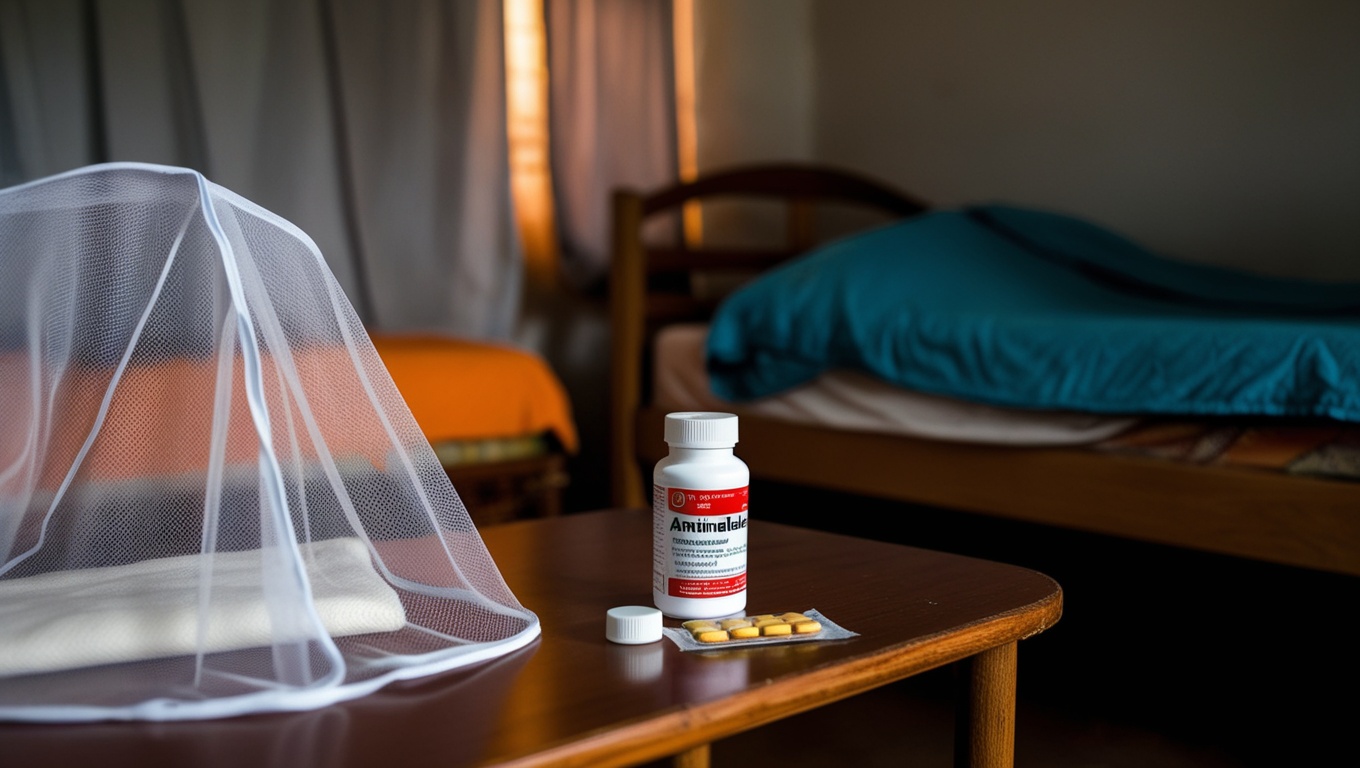
For the first time in a decade, West Africa held a health success story: in several countries, including Benin, malaria incidence was falling year after year. In 2024, that story wavered. The world recorded 282 million cases and 610,000 deaths, around 9 million more cases than the previous year, and official development assistance for health contracted by roughly 21%. The parasite is no longer the only adversary: it is now money that is missing, at the very moment when the tools to win finally exist.
A still-crushing burden, but curves that are turning
The WHO African Region, that is the continent as a whole, accounts for 95% of cases and 95% of deaths worldwide. Within this block, West Africa shows a leading pack in which Benin (354.25 cases per 1,000 people at risk in 2024), Burkina Faso (353.49) and Mali (346.22) remain neck and neck. Senegal stands out as a striking exception with 36.78 cases per 1,000, nearly ten times fewer than its Sahelian neighbours. This spread, a factor of ten between the first and the last, is in itself the most important message in the series: under comparable climate and within a single region, incidence is not a geographical given, it is the product of public policy.
The Senegalese counter-example: proof that a trajectory exists
Comparing Benin with Senegal over fifteen years is the most instructive exercise this data allows. As early as 2010, the two countries already did not belong to the same epidemiological world: Benin was above 400 cases per 1,000 people at risk (417.07), while Senegal stood at around 60. Fifteen years later, the gap remains of that order, with Senegal staying below the 70 cases per 1,000 mark throughout the period. Benin followed a jagged path: a decline until 2013, a rise back up to 2016 (415.92 cases per 1,000), then a fall to 354.25 in 2024. Senegal, for its part, held a low but irregular level, oscillating between 35 and 66 depending on the year (35.59 in 2020, 38.10 in 2022, 36.78 in 2024), with no steady decline. The lesson is twofold: a low level is sustainable in the region, but it is achieved neither automatically nor linearly.
Senegal's trajectory is nothing magical. It rests on a combination of interventions delivered at scale and with consistency: seasonal chemoprevention rolled out across sixteen districts with coverage close to 98% in 2023, a strategy adapted region by region according to the level of transmission, and targeted mass drug administration in the low-transmission zones of the north. In other words, Senegal did what fine-grained data makes possible: concentrate resources where they produce the greatest effect, and sustain the effort over time. It is precisely this discipline of allocation that distinguishes a falling curve from a stagnant one.
Why the decline is never secured: the mechanics of a reversal
If malaria regained ground in 2024 even though the tools have never been better, it is because a reversal mechanism has set in, every cog of which is measurable. Three forces push the curves upward. The first is biological: partial resistance to artemisinin, the backbone of recommended treatments, is now confirmed or suspected in at least eight African countries, while mosquito resistance to the pyrethroids that coat bed nets is confirmed in 48 countries. The second is entomological: the urban mosquito Anopheles stephensi has invaded nine African countries, posing a new threat to cities long relatively spared. The third is financial, and it is the one that amplifies the other two.
Drug resistance is not a distant threat. In the East African emergence foci, validated resistance markers have reached high prevalence: more than 20% of samples in 11 of the 16 districts surveyed in Uganda in 2021-2022, around 20% in Rwanda as early as 2018, and up to 22.8% in some districts of north-western Tanzania near the Rwandan border. These mutations cross borders. For West Africa, still relatively spared, the countdown is set: without systematic molecular surveillance, the continent risks discovering resistance at the moment it is already causing treatments to fail, rather than before.
- Pharmacological front: partial resistance to artemisinin confirmed or suspected in at least eight African countries, with validated-marker prevalence exceeding 20% in several East African districts.
- Entomological front: pyrethroid-treated bed nets weakened by resistance present in 48 countries, and urban invasion by Anopheles stephensi in nine African countries.
- Financial front: a roughly 21% contraction in official development assistance, which simultaneously undermines commodity procurement and surveillance systems.
Funding, the real bottleneck
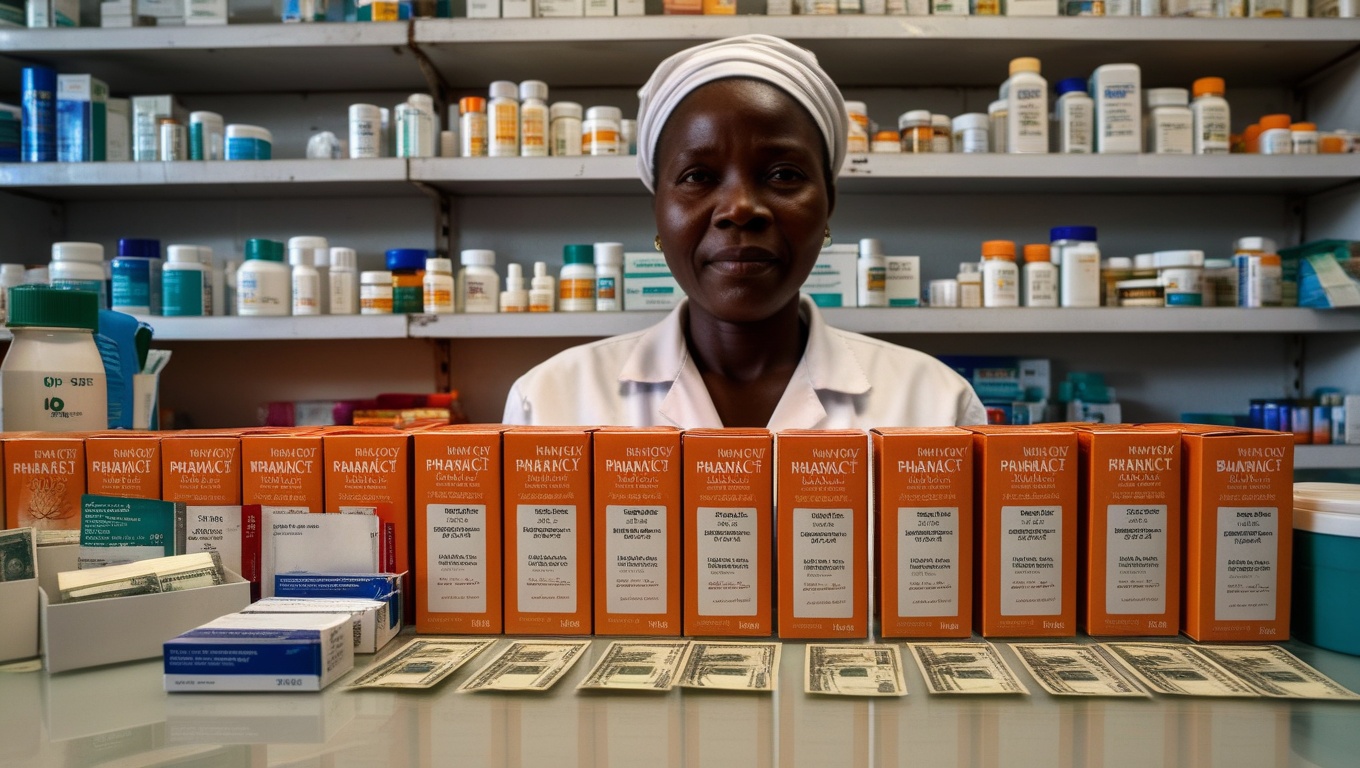
These epidemiological gains rest on an increasingly fragile financial base. In 2024, only USD 3.9 billion was mobilised for the global response, that is 42% of the USD 9.3 billion target set for 2025. Around USD 5.4 billion is therefore still missing to reach that goal, whereas the gap was already estimated at USD 4.3 billion in 2023: the shortfall is widening rather than closing. The Global Fund remains the leading donor, providing about 59% of international funding for the response and a cumulative investment of more than USD 20 billion in anti-malaria programmes. But this funding has plateaued for a decade, and the contraction in official development assistance (about 21% in 2024) now makes it an unstable variable, where a predictable base is needed.
The parasite is retreating; it is now the funding gap that threatens the gains. In 2024, USD 3.9 billion was mobilised, that is only 42% of the USD 9.3 billion target.
This bottleneck is all the more absurd given that the return on malaria investment is well documented. Since 2000, the global response has averted 2.3 billion cases and 14 million deaths, including around one million lives and 170 million cases in 2024 alone. Forty-seven countries and one territory have been certified malaria-free. Cutting funding today is not a saving, it is the disarming of a system that delivers measurable results, and paying more dearly for the resurgence that follows.
The cost of inaction: a burden measured in growth points
Abandoning the fight does not make the expense disappear: it shifts from public health to the economy as a whole. Malaria costs Africa in the order of USD 12 billion a year in direct losses, and it trims the continent's growth by about 1.3 points a year through premature mortality and lost productivity. The burden falls first on children: across sub-Saharan Africa, malaria contributes 5 to 8% of all-cause school absenteeism, the equivalent of half of all preventable absenteeism. A malaria epidemic means lost days of school and work, households tipped into health spending, and growth that never fully returns.
Conversely, the leverage of a decisive reduction is considerable. According to the Oxford Economics Africa analysis featured in The Malaria Dividend report, reducing malaria by 90% by 2030 would add about USD 16 billion a year to the continent's GDP, a cumulative total of around USD 126.9 billion over the period, with Nigeria alone capturing close to USD 35 billion in gains. The question facing decision-makers is therefore not whether to pay, but when: now, in the form of prevention investment, or later, in the form of lost growth and more expensive curative care.
This cost is distributed deeply unequally, and that is what macroeconomic aggregates leave in the shadows. Malaria is both a consequence and a cause of poverty: it strikes hardest at rural and poorer households, those with the lowest coverage of bed nets and chemoprevention, and who devote the heaviest share of their budget to curative care. It also weighs particularly on women, who bear most of the care for sick children, lose days of work and income, and for whom gestational malaria remains a major cause of anaemia and low birth weight. Finally, the 5 to 8% of school absenteeism attributable to malaria, equivalent to half of preventable absenteeism, mortgages the human capital of the next generation. Fighting malaria is therefore not only a health policy, it is a policy of reducing inequality and protecting household income.
Nigeria's weight: where every dollar counts most
Not all countries carry the same weight in the regional equation. According to the World Malaria Report 2025, Nigeria alone accounted for about 24% of the world's estimated cases and about 30% of deaths in 2024. This concentration is not just a statistic: it defines where each invested dollar saves the most lives. Mortality remains the disease's harshest marker, and in Benin it is estimated at around 89 deaths per 100,000 people, placing the country among the most affected in the region. The hierarchy of absolute burdens must guide allocation: targeting first the foci with the highest burden and lethality maximises the impact of a scarce resource.
What national averages hide, and why CRAD measures it
A national incidence figure is an average, and an average is an incomplete story. Behind Benin's 354 cases per 1,000 lie considerable disparities between a lakeside commune in the south and a district in the north, between an urban zone covered by bed nets and a hamlet beyond the reach of chemoprevention. Artemisinin resistance, for its part, does not spread uniformly but in foci and cross-border corridors: in East Africa, marker prevalence ranges from under 8% to over 22% between neighbouring districts. Steering a health policy on the national average alone is like watering a field with an average of rainfall: some plots drown while others go dry.
This is CRAD's angle of work. The data that changes a decision is not the average, it is disaggregated and geolocated data: incidence by health district, actual chemoprevention coverage by age cohort, presence of resistance markers by sentinel site, stock-out rates by health facility. Measuring finely makes three things possible that an average forbids: spotting the pockets of residual transmission that sustain the epidemic, detecting resistance before it causes treatments to fail, and documenting the return on every franc invested in order to defend funding over time. In a context where resources are becoming scarce, measurement precision is no longer an analytical luxury, it is the condition of effectiveness.
The tools exist: the problem is no longer knowing, it is funding
The paradox of 2024 is that the science has never been more advanced. Seasonal chemoprevention covered around 53 million children across 18 countries in 2023, an intervention capable of reducing cases by more than 70% according to clinical trials. On the vaccine side, 24 countries have introduced WHO-recommended vaccines (RTS,S then R21) into routine immunisation since 2021. New dual-ingredient bed nets, designed to circumvent pyrethroid resistance, contributed to the million lives saved in 2024. None of these advances will deliver their full effect without predictable, multi-year funding: a fall in incidence cannot be decreed, it must be funded and steered.
Key takeaways
- The WHO African Region accounts for 95% of the world's malaria cases and 95% of its deaths (an estimated 282 million cases and 610,000 deaths in 2024, around 9 million more than in 2023), but incidence is falling in several countries: Benin dropped from 415.92 cases per 1,000 in 2016 to 354.25 in 2024.
- Senegal (36.78 cases per 1,000 in 2024) proves that a low level is sustainable in the region: it has stayed below 70 cases per 1,000 since 2010, while Benin remains above 350, a gap close to a factor of ten in 2024, thanks to sustained and targeted chemoprevention.
- Funding is the weak link: USD 3.9 billion mobilised in 2024, that is only 42% of the USD 9.3 billion target for 2025, a gap of around USD 5.4 billion deepened by a roughly 21% contraction in official development assistance.
- Three resistance fronts are advancing in parallel: artemisinin resistance (at least eight African countries), pyrethroid resistance (48 countries) and the invasion of Anopheles stephensi (nine countries).
- The cost of inaction is massive: around USD 12 billion in direct losses per year and 1.3 growth points trimmed, while reducing malaria by 90% by 2030 would add about USD 16 billion a year to Africa's GDP.
Recommendations to West African decision-makers
- Secure domestic funding for the long term by enshrining it in multi-year finance laws, in order to reduce dependence on the roughly 59% of international funding provided by the Global Fund and to cushion the roughly 21% contraction in official development assistance.
- Replicate the Senegalese model: roll out seasonal chemoprevention (more than 70% case reduction) with coverage close to 98% and a district-by-district strategy, prioritising the high-incidence foci of the Sahel (Benin, Burkina Faso, Mali, above 346 cases per 1,000 in 2024).
- Install systematic molecular surveillance of artemisinin resistance at sentinel sites, to detect validated markers before they reach the prevalence above 20% observed in East Africa, and not after.
- Switch to dual-ingredient bed nets in zones of proven pyrethroid resistance (48 countries affected) and integrate Anopheles stephensi surveillance in exposed cities.
- Accelerate the rollout of malaria vaccines (RTS,S then R21) by integrating them into expanded immunisation programmes, with rigorous, disaggregated coverage monitoring by age cohort and district.
- Steer on disaggregated, geolocated data rather than the national average, targeting as a priority the foci with the highest absolute burden and mortality, first among them Nigeria (about 30% of global deaths in 2024), to maximise the impact of every dollar invested.
Sources
- World Bank, indicator SH.MLR.INCD.P3 (Malaria incidence)
- WHO, World Malaria Report 2025
- WHO, World Malaria Report 2025 press release (resistance and funding, December 2025)
- WHO, Nigeria malaria country profile 2024
- UN News, drug resistance and underfunding (December 2025)
- The Global Fund, malaria programme
- Severe Malaria Observatory, Mali statistics
- World Bank, indicator SH.STA.MALR (malaria cases reported), Mali: 3,651,745 reported cases in 2024
- Center for Global Development, Malaria Costs Africa 12bn a Year
- Gavi, The Malaria Dividend (Oxford Economics Africa): USD 16 billion of GDP per year
- SMC Alliance, 53 million children covered by seasonal chemoprevention in 2023
- New England Journal of Medicine, partial resistance to artemisinin in Uganda