Clean cooking: the blind spot of the energy transition
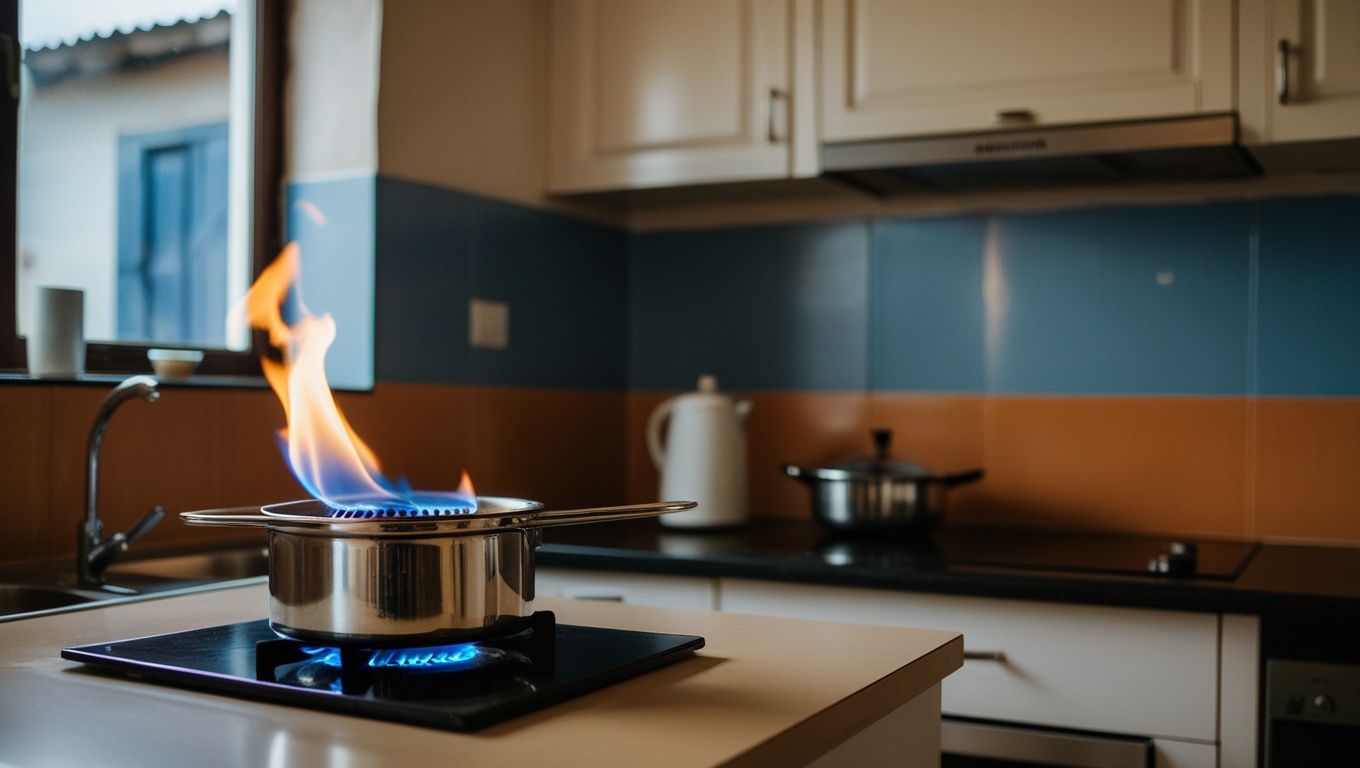
When we talk about the energy transition in West Africa, attention almost always turns to electricity: solar plants, mini-grids, household connections. Yet the energy families consume every day, the energy of cooking, remains a blind spot. In Sub-Saharan Africa, nearly one billion people still cook without access to clean energy, roughly four households in five. The bill is threefold and measurable: around 815,000 premature deaths per year across the continent, 1.3 million hectares of forest lost to fuel gathering each year, and close to a quarter of Africa's energy-related CO2 emissions. Globally, the World Bank estimates the cost of this failure at 2.4 trillion dollars per year. This is not a domestic matter: it is a public policy file that can be measured, and that can be steered.
A regional gap ranging from 1 to 44
Behind the regional average lies a deep divide. World Bank data (indicator EG.CFT.ACCS.ZS, year 2023, the latest available for all countries) show a continuum from 44.1% access in Côte d'Ivoire to 1.3% in Mali. Benin sits almost at the very bottom of the scale, with only 6% of its population having access to clean cooking fuels, the second-to-last rank ahead of Niger (5.1%) and Mali (1.3%). For a country setting national climate ambitions, this is a warning sign: the majority of households still depend on open fires or unprocessed biomass.
The Ivorian counter-example: a lag that can be closed
Benin's and Mali's lag might pass for a fate tied to poverty or geography. Côte d'Ivoire's trajectory shows the opposite. In 2000, Abidjan and Cotonou were not as far apart on this indicator as today's distance suggests: Côte d'Ivoire started higher (15.9% versus 0.7% for Benin), but both countries belonged to the same world of wood and charcoal cooking. Twenty-three years later, the gap has widened into a chasm. Côte d'Ivoire has nearly tripled its access rate to reach 44.1% in 2023, while Benin is stuck at 6%. Nigeria offers an even more striking demonstration: starting from 0.7% in 2000, it crossed 26.2% in 2023, driven by a deliberate policy of promoting domestic LPG.
This divergence is the single most important data point in the whole file. It shifts the question: it is not about whether West Africa can make progress, but about understanding why some countries accelerate while others stagnate. Targeted LPG subsidy, structuring a distribution chain, a stable price signal, the political will to treat cooking as a national priority: the levers exist, and they have been pulled just a few hundred kilometres from Benin. Stagnation is not a destiny, it is a public policy choice by default.
Breaking down the cost: why dirty cooking is so expensive
The 2.4 trillion dollars per year figure put forward by the World Bank only makes sense once broken down. It aggregates three distinct causal mechanisms, whose relative weight directly shapes the strategy to adopt. The first, and by far the heaviest, is health: about 1.4 trillion dollars in costs from the respiratory, cardiovascular and ocular diseases caused by household smoke. The second is the time lost by women, estimated at around 800 billion dollars of unrealized productivity: wood collection, fire management, prolonged meal preparation. The third is climatic, about 200 billion dollars, reflecting the CO2 and short-lived pollutants emitted by the incomplete combustion of biomass.
This breakdown has a practical consequence: as long as cooking is filed under the energy ministry alone, it stays under-prioritized, because its main return (health and women's time) falls into other budgets. The factors weighing on the balance sheet add up:
- Health: indoor air pollution is thought to account for nearly 10% of premature deaths in Sub-Saharan Africa, striking first the women and young children exposed to the hearth.
- Time: worldwide, women and girls are estimated to lose around 13 hours per week cooking with biomass and collecting fuel, hours taken away from school and economic activity.
- Forest: demand for woodfuel is estimated to drive the loss of about 1.3 million hectares of forest per year in Africa, and 275 million people are thought to live in areas of unsustainable harvesting (woodfuel hotspots).
- Climate: traditional cooking is estimated to emit on the order of 1.2 gigatonnes of CO2 per year, comparable to the combined emissions of international aviation and shipping.
A silent health crisis
Cooking over wood fires or charcoal in poorly ventilated spaces generates indoor air pollution whose first victims are women and children. Across the continent, this pollution is estimated to be responsible for around 815,000 premature deaths each year, and inadequate cooking is thought to account for nearly 10% of premature deaths in Sub-Saharan Africa. Set against the 2.9 million deaths worldwide linked to indoor air pollution (WHO estimate), these figures place Africa at the heart of a global problem. It is a preventable epidemic, yet largely invisible in public health statistics, because it is rarely coded as such in health registers.
Forests on the front line
The stakes are not only sanitary; they are also climatic and ecological. According to the International Energy Agency, the energy demand for cooking is estimated to drive the loss of about 1.3 million hectares of forest per year in Africa, and the lack of clean cooking alone is thought to represent close to a quarter of energy-related CO2 emissions on the continent. In some West African countries, dependence on biomass reaches extreme levels: in Burkina Faso, biomass is thought to cover around 86% of national energy consumption, and more than nine inhabitants in ten reportedly rely on some form of solid biomass fuel. Every open fire that persists is both a health risk and added pressure on forest ecosystems already weakened by climate change, in a region where the advance of the Sahelian front is already documented.
As long as cooking is treated as a domestic matter rather than a pillar of energy policy, the transition will remain incomplete.
The invisible burden on women
If we had to name a single population on whom the cost of dirty cooking rests, it would be women and girls. They are the ones who collect the wood, sometimes over several kilometres, who tend the fire, who inhale the most concentrated smoke, and whose days are lengthened accordingly. The roughly 800 billion dollars of productivity lost worldwide each year, a third of the total cost, are not an accounting abstraction: they amount to around 13 hours per week per woman, taken away from education, paid work and rest. Conversely, modern cooking technologies can cut meal preparation time by up to 70%, freeing a reserve of time directly convertible into girls' schooling and women's economic activity.
This angle carries strategic weight for funders: a clean cooking program is not only an energy policy, it is one of the most direct levers for women's economic empowerment in West Africa. Measuring it as such, in hours and income freed up, changes the budget trade-off.
Real financing, but insufficient and poorly distributed
Capital is mobilizing, but at a pace below needs. In 2023, direct investment in Africa for clean cooking reached 675 million USD, up 10% year on year, yet it remains about 70% below required levels: available financing covers barely 30% of the sector's needs. The IEA puts the effort needed at around 37 billion USD cumulatively through 2040, more than 2 billion per year. Progress in access follows the same logic of partial catch-up: across Sub-Saharan Africa, nearly 13 million people per year gained access to clean cooking over the past five years. These gains remain negligible against the some 960 million people without access, and they rely mainly on urban LPG: over the recent period, LPG has driven most new connections (on the order of 12 million people per year), far ahead of other clean solutions (about 1 million), leaving rural areas behind.
The cost of inaction: a meter that keeps running
Doing nothing is not a neutral option, it is an expense that renews itself every year. Looking ahead, the IEA estimates that reaching universal access would require 80 million people to gain access to clean cooking each year until around 2040. Yet Sub-Saharan Africa is gaining only about 13 million per year today: the current pace is six times too slow. At this rate, the goal of universal access for all, set for 2030 in the global energy agenda, will be missed by a wide margin, and the deficit will not be closed before the second half of the century in the countries furthest behind. Meanwhile, the meter of consequences keeps running: hundreds of thousands of avoidable deaths each year, hectares of forest lost, hours of women's lives confiscated.
The arithmetic of inaction is unforgiving. Conversely, the IEA's universal access scenario quantifies the benefits of acceleration: about 4.7 million premature deaths averted by 2040, more than 460,000 permanent jobs created, and a net emissions reduction on the order of 540 million tonnes of CO2 equivalent per year. The cost of action is documented (about 2 billion USD per year); the cost of inaction is counted in lives and in billions lost in perpetuity.
Nigeria shows a path to scale
Models exist for scaling up. Nigeria, which raised its access rate from 0.7% in 2000 to 26.2% in 2023, has launched one of the continent's largest clean-cookstove projects, targeting 80 million units. At full capacity, this program could, according to estimates, avoid on the order of 1.2 billion tonnes of CO2 per year and generate up to 5 billion USD in revenue from the carbon market. The appeal of this model is that it weaves together three logics often handled separately: public health, forest protection, and a self-sustaining financing mechanism through carbon credits. It is precisely this kind of integration that most West African national frameworks still lack, and that Côte d'Ivoire and Nigeria have begun to put in place while Benin, Niger and Mali lag behind.
What national averages hide
All the data mobilized so far are national averages. Yet this is precisely where the blind spot of decision-making lies. A national access rate of 6% in Benin says nothing about the real geography of the problem: it lumps together a Cotonou where LPG is advancing and rural departments where it is almost non-existent, affluent neighbourhoods and households that spend a disproportionate share of their income on charcoal. The same average covers opposite realities depending on sex, age, setting and standard of living. Steering a clean cooking policy on the basis of a national average is like watering a territory uniformly when only some plots are thirsty.
This is where fine measurement changes the decision. Data disaggregated by district, by sex and by income quintile, geolocated and updated, makes it possible to answer the questions that truly govern resource allocation: where are the woodfuel hotspots to target first? Which households would switch to LPG with what subsidy? Where does biomass dependence directly threaten forest cover? This is CRAD's core conviction: no clean cooking policy is more solid than the data on which it rests. Measuring actual access, household by household, rather than inferring it from an average, is the condition for effective targeting, credible monitoring and evaluation, and the unlocking of international financing, which increasingly demands verifiable indicators.
Steering on a national average is like watering a territory uniformly when only some plots are thirsty.
Key takeaways
- Nearly one billion people in Sub-Saharan Africa cook without clean energy, at an estimated cost of around 815,000 premature deaths per year across the continent.
- In West Africa, access ranges from 44.1% (Côte d'Ivoire) to 1.3% (Mali) in 2023; Benin, at 6%, is among the furthest behind.
- The 2000-2023 trajectory proves the lag can be closed: Côte d'Ivoire nearly tripled its rate while Benin stagnated, making it a public policy choice, not a fate.
- The global cost of non-clean cooking reaches about 2,400 billion USD per year: health (1,400), women's time (800), climate (200).
- The current pace of access (about 13 million people per year in Sub-Saharan Africa) is six times too slow for the 80 million per year that universal access by 2040 requires.
Recommendations for West African decision-makers
- Explicitly integrate clean cooking into nationally determined contributions (NDCs) and energy strategies, and treat it as a cross-ministerial file (energy, health, gender, forests) rather than a secondary domestic matter.
- Draw on the Ivorian and Nigerian trajectory: combine a targeted LPG subsidy, the structuring of a distribution chain and a stable price signal, rather than subsidizing an imported fuel indiscriminately.
- Design geolocated rural extension programs, prioritizing woodfuel hotspots and the districts where biomass dependence threatens forest cover, so that gains are not confined to cities.
- Mobilize carbon financing at scale, on the model of Nigeria's 80-million-stove program, to turn CO2 and deforestation reductions into lasting revenue streams.
- Measure and value the female dividend: track the hours and income freed up by clean cooking, and embed these gains in budget trade-offs as a lever for women's economic empowerment.
- Invest in disaggregated data systems (district, sex, income quintile) and monitoring-and-evaluation to measure actual access, a condition for effective targeting and for unlocking international financing.
Sources
- World Bank, indicator EG.CFT.ACCS.ZS (access to clean cooking)
- IEA, Universal Access to Clean Cooking in Africa
- IEA, Executive Summary: Universal Access to Clean Cooking in Africa
- IEA, Clean Cooking State of Play and Recent Progress
- WHO, Household Air Pollution and Health (fact sheet)
- World Bank / Clean Cooking Alliance, The State of Access to Modern Energy Cooking Services (2.4 trillion USD cost)
- Daily Sabah, Lack of clean, safe cooking costing $2.4T annually: World Bank report
- Health Policy Watch, Africa's Clean Cooking Gap Leaves 1 Billion Without Access
- Nigeria Clean Cooking Stoves Carbon Credits Initiative
- Borgen Project, Indoor Air Pollution in Burkina Faso
- African Development Bank, Clean Cooking Summit 2024