Renewables in the ECOWAS electricity mix: a transition at multiple speeds
In West Africa, energy is not only a climate question: it is the lock on growth. About 220 million people still lived without electricity there in 2023, and outages cut several points off firms' annual sales every year. In this context, ECOWAS has set itself a clear ambition: to raise the share of renewables to 48% of its electricity mix by 2030. Yet behind this shared regional target, the figures paint a far more uneven reality. According to regional estimates, the region's electricity mix still counts only around 26% renewables (large hydropower included), and this average conceals gaps of a factor of 240, between leaders such as Mali (62.3% in 2021) and economies in acute energy crisis such as Benin (0.26%). Understanding these gaps, and what they conceal, is the precondition for a credible common trajectory.
A regional ranking that reveals diverging trajectories
In 2021, the share of electricity from renewable sources varied by a factor of 240 between the first and last country in the zone. Mali leads by a wide margin, with 62.3% of its electricity from renewable sources, a score driven by a long-standing hydropower fleet. Ghana follows at 34.9%, also anchored in the large hydropower of Lake Volta. At the other extreme, Benin reaches only 0.26%, reflecting near-total dependence on imported fossil fuels, notably from neighbouring Nigeria. Between these two poles, Togo (25.3%), Côte d'Ivoire (22.8%) and Nigeria (22.2%) occupy an intermediate position, while Burkina Faso (13.9%), Senegal (13.3%) and Niger (7.8%) lag behind on the electricity perimeter alone.
This ranking is not a scoreboard, it is a map of dependencies. A country at the top may be there because it equipped a river forty years ago, not because it is investing today. A country at the bottom may be the one that, lacking hydro resources, has the most to gain from a switch to solar. The position in the ranking therefore reflects the inherited legacy more than the present effort: which is precisely why one must read the dynamic, not only the level.
Senegal, proof that no lag is inevitable
It is tempting to believe the ranking is fixed, that countries without a great river are condemned to stay at the bottom. Senegal proves the opposite. Its renewable share in electricity rose from just 1.6% in 2015 to 13.3% in 2021, an eightfold increase in six years, without relying on hydropower. This leap is anything but abstract: it has materialised in concrete and silicon. The country now has an installed solar capacity of about 671 MW, making it the third-largest solar fleet in West Africa behind Nigeria and Côte d'Ivoire, and its electricity access rate has reached 84%, well above the regional average.
The contrast with the top countries is instructive. In Mali, the renewable share fell from 65.9% in 2015 to 62.3% in 2021, because demand is growing faster than clean capacity in a context of political-security fragility and climate variability that hold back hydropower investment. In other words, the historical leader stagnates in relative terms while the former laggard surges. The trajectory matters more than the starting position, and the trajectory is built, not inherited.
Senegal multiplied its renewable electricity share eightfold in six years, without a great river: the trajectory is built, not inherited.
Two models: inherited hydropower and the rise of solar
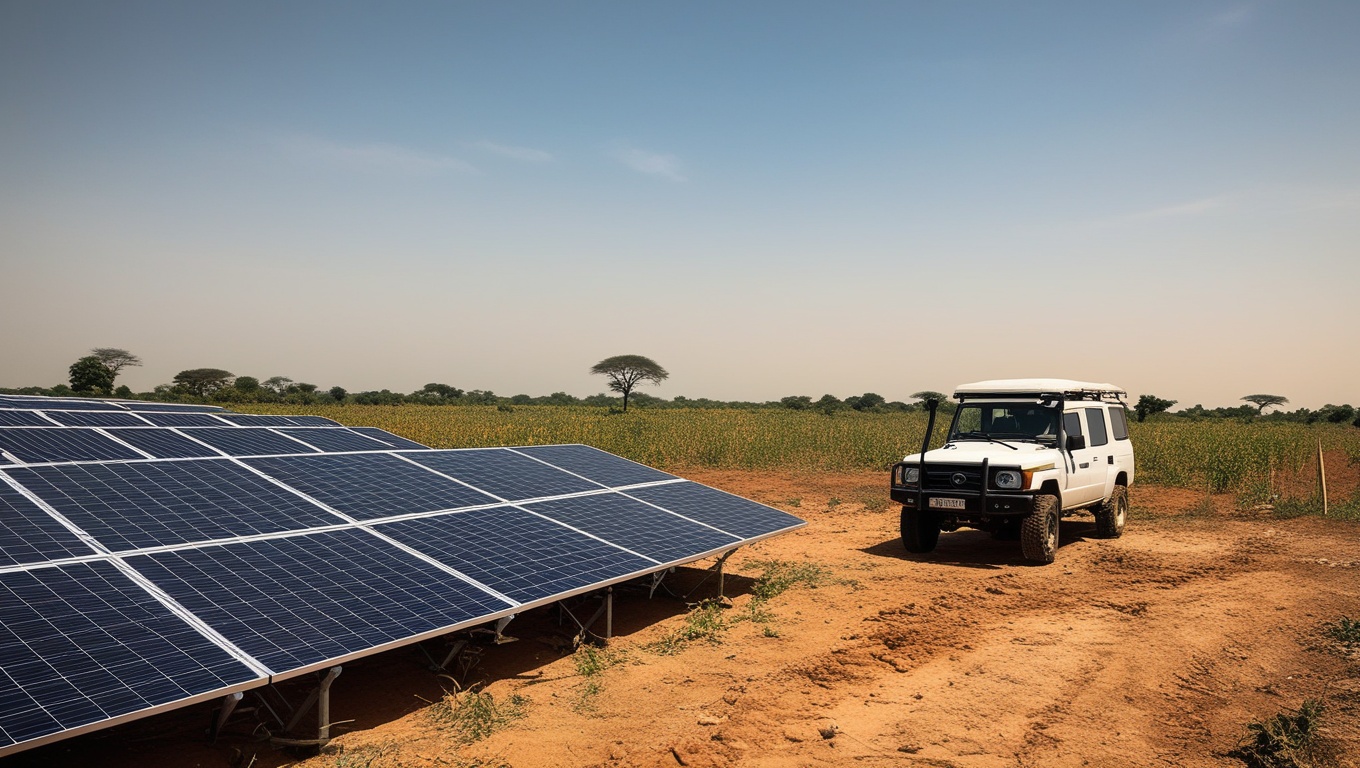
Behind the figures, two opposite mechanisms are at work. The first is a legacy model: large hydropower built decades ago (Mali, Ghana) provides a massive but barely expandable base, exposed to lower flows in dry years and to the continuous growth of demand. This base does not disappear, but its relative share mechanically erodes as consumption rises. The second is a deployment model: solar and wind capacity added quickly, modular, decentralisable, whose cost has fallen to the point of becoming the cheapest means of generation. The structure of Senegal's fleet shows this: of its roughly 671 MW of solar, about 307 MW are grid-connected plants and nearly 294 MW are residential installations, a sign that deployment is happening simultaneously from the top (large plants) and from the bottom (rooftops, mini-grids).
The factors that explain who advances and who stagnates break down as follows:
- The collapse in the cost of solar: the levelised cost of solar photovoltaic electricity fell to about 0.043 USD/kWh on a global average in 2024, and the average total installed cost in Africa was about 1,093 USD/kW in 2023; solar is now on average 56% cheaper than the fossil alternative.
- The financing lock: between 2010 and 2020, West Africa attracted only about 4 billion USD of renewable investment, less than 8% of the continental total, with Nigeria alone capturing 21% of these flows.
- Political-security fragility: in the Alliance of Sahel States countries (Burkina Faso, Mali, Niger), the electricity access rate is only 32.1%, against 61.6% on average in the twelve ECOWAS members, which diverts private capital.
- The modularity of the technology: unlike a dam, a solar plant is built in months rather than years and spreads across the territory, which changes the very nature of planning.
The 2030 target: a gap of about 22 points and a wall of investment
With a renewable share estimated at around 26% in the regional electricity mix and a target of 48% by 2030, ECOWAS must practically double the clean share in seven years. The gap of about 22 points is all the more demanding because it can no longer rest on large hydropower, already widely exploited and vulnerable to climate variability. Solar photovoltaics, quickly deployable and increasingly competitive, is the main lever.
But this gap in points is compounded by a far more dizzying financing gap. The region's investment needs to meet its energy goals are estimated at about 67 billion USD for renewable generation and 52 billion USD for transmission and distribution over the 2015-2030 period. Set against the 4 billion USD actually mobilised over the whole 2010-2020 decade, these needs reveal a structural financing deficit: at the past pace, the region would take decades to raise what its 2030 trajectory requires in a few years. The wall is not technological, it is financial and institutional.
The cost of inaction: a measurable brake on growth
Doing nothing has a price, and it is measurable. In Sub-Saharan Africa, about three quarters of firms experience power outages and lose on average 8.3% of their annual turnover because of these interruptions, a proportion that reaches 7.5% for exporting firms alone. In the worst-affected countries, unreliable electricity translates into GDP losses approaching 4% per year. An energy deficit is therefore not a mere inconvenience: it is an invisible tax on industrialisation, hitting first the firms most exposed to international competition.
For a country like Benin, dependent on fossil imports and on a neighbour for its power, this cost compounds with the bill for imported fuels and exposure to price volatility. Conversely, every megawatt of installed solar is a megawatt subtracted from this double vulnerability. Inaction does not preserve the status quo: it lets growth slip toward the territories where electricity is reliable and cheap.
What the '26%' average does not say: electricity, total energy and poverty
A common analytical pitfall is to confuse the renewable share in electricity with its share in total energy consumed. Yet the two indicators tell opposite stories. Benin shows 54.5% renewables in its final energy consumption in 2021, but only 0.26% in its electricity: a gap explained by the weight of traditional biomass (wood, charcoal) in domestic uses, not by a virtuous power fleet. Nigeria displays the same extreme contrast, with 80.3% total renewable energy against 22.2% electricity. Conversely, Ghana is one of the few countries where the two measures converge (39% total energy and 34.9% electricity), a sign of electrification genuinely anchored in hydropower. For decision-makers, the challenge is not to be satisfied with a good total-energy score that often reflects energy poverty rather than a successful transition.
This 'renewable biomass' has a human face, and it is largely female. In the ECOWAS region, about 80% of households still depend on traditional biomass for cooking, and the use of these fuels in inefficient stoves causes about 250,000 deaths a year from indoor air pollution, mostly women and children under five. Globally, household air pollution caused about 2.9 million deaths in 2021, including over 309,000 children under five. Counting a country as '54.5% renewable' without disaggregating this reality means mistaking a public-health problem for a climate virtue. It is the perfect illustration of what an aggregated average can conceal.
The CRAD angle: a transition steered in disaggregated data
The cross-cutting lesson of this overview is methodological. The regional average of 26% is accurate, but it is useless for decision-making: it adds together a Mali whose hydropower is declining, a Senegal whose solar is booming, and a Benin with almost no clean generation of its own. None of these three countries should receive the same recommendation. In the same way, a high national renewable-energy rate can conceal a poverty that kills. Deciding well therefore requires going beneath the average: by country, by sector (hydro, grid solar, decentralised solar, biomass), by use (electricity, cooking), and by territory.
This is precisely CRAD's craft: turning an aggregated statistic into fine-grained, comparable, geolocated decision-ready data. Measuring the trajectory and not only the level; distinguishing electricity from total energy; mapping solar potential and unmet demand; linking energy to its social, health and gender effects. Senegal precisely steered its leap through a quantified tracking of its solar and wind additions. Data is not an accessory to the energy transition: it is its steering instrument.
A regional average of 26% adds together three countries that should not receive the same recommendation. Deciding well requires going beneath the average.
Gender, the hidden dimension of the energy transition
West Africa's energy transition has a gender dimension too often absent from dashboards. It is mostly women who collect wood and charcoal, who suffer indoor air pollution, and who devote considerable time to tasks that modern energy would ease. Conversely, access to reliable electricity and clean cooking solutions frees up time, health and economic opportunity. This is the insight at the heart of the WOCEWA project led by CRAD on behalf of CEREEC, which measured the Gender Equality Index in renewable-energy SMEs across the twelve ECOWAS countries and established a regional index of 48.1 out of 100, with only 16% of SMEs in the sector led by women. Measuring gender in energy is not a moral supplement: it is a condition of policy effectiveness, because we only correct what we count.
Access, the other side of the same equation
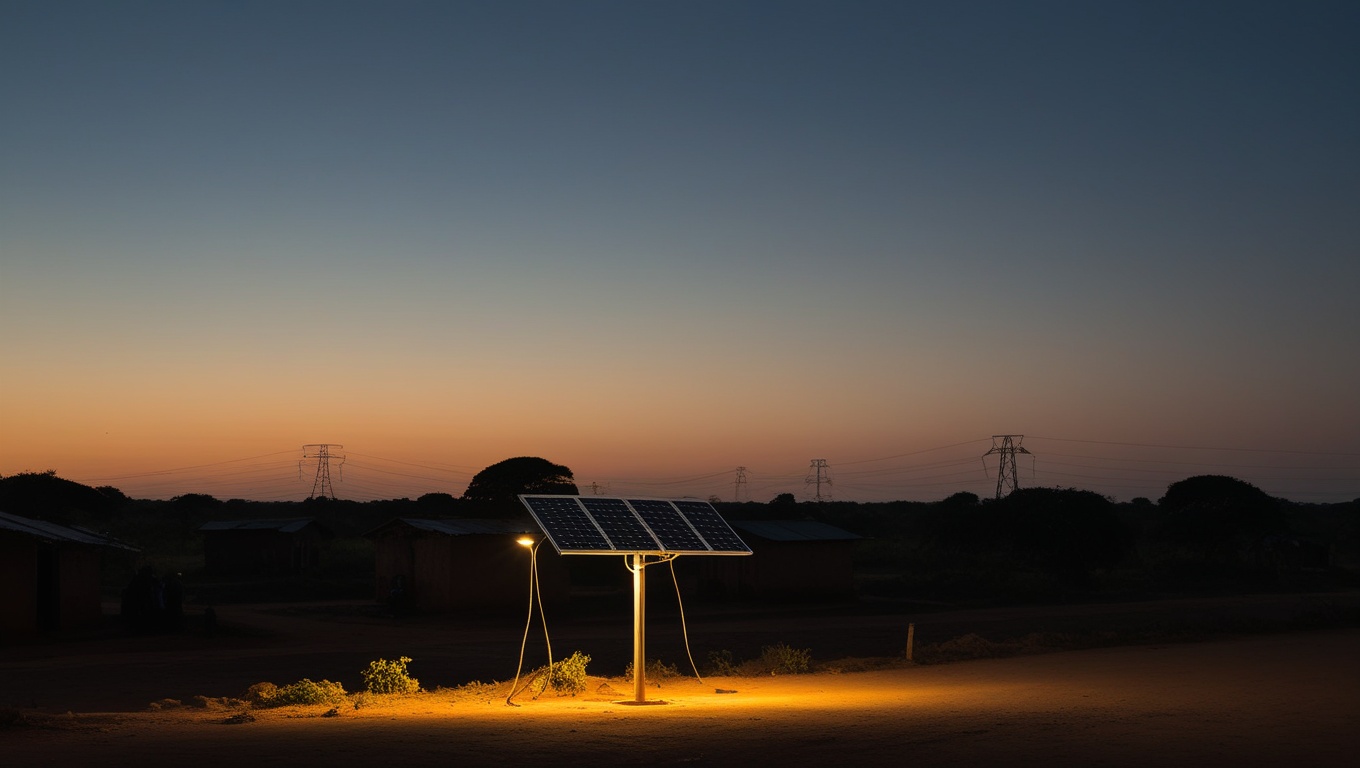
Talking about a renewable mix without talking about access would amount to greening an electricity that does not arrive. Yet about 220 million people still lived without electricity in West Africa in 2023, and the access rate falls to around 8% in rural areas. It is precisely there that the modular nature of solar becomes strategic: solar mini-grids, solar home systems and decentralised plants can electrify territories that the central grid will not reach for a long time. The same investment thus serves two goals: greening the mix and extending access. The transition is not a trade-off between climate and development, it is their point of convergence, provided investments are targeted where the data show that the access deficit and the solar potential overlap.
Key takeaways
- The ECOWAS electricity mix is estimated at around 26% renewables, far from the 48% target set for 2030, a gap of about 22 points to close in seven years.
- Gaps between countries are extreme (factor of 240): from 62.3% in Mali (inherited hydropower, declining) to 0.26% in Benin (dependence on fossil imports).
- No lag is inevitable: Senegal rose from 1.6% in 2015 to 13.3% in 2021 (x8) without a great river, with about 671 MW of installed solar and 84% electricity access.
- The cost of inaction is quantified: about 8.3% of turnover lost by firms experiencing outages, up to 4% of GDP per year in the worst-affected countries; 220 million people without electricity in 2023.
- The average conceals the essentials: Benin shows 54.5% total renewable energy but 0.26% renewable electricity, a domestic biomass that causes about 250,000 deaths a year in the ECOWAS region, mostly women and children.
Recommendations for West African decision-makers
- Make solar photovoltaics the national investment priority: at about 0.043 USD/kWh, it is now 56% cheaper than the fossil alternative, and the hydropower base (declining in Mali, from 65.9% to 62.3% between 2015 and 2021) will not be enough to close the roughly 22 missing points.
- Close the financing wall (about 67 USD bn for generation and 52 USD bn for the grid by 2030, against 4 USD bn mobilised over 2010-2020) through blended-finance mechanisms (donors, guarantees, private sector), as a priority in the AES countries where access is only 32.1%.
- Accelerate regional interconnections to pool localised hydropower (Mali 62.3%, Ghana 34.9%) with distributed solar potential, and secure supply for deficit countries such as Benin (0.26%).
- Target the 220 million people without electricity, of whom 92% are rural, through decentralised solar (mini-grids, home systems) that greens the mix and extends access with the same euro invested.
- Treat clean cooking as a health and gender emergency, not a by-product: 80% of households depend on biomass and about 250,000 annual deaths are linked to it in the region, hitting women and children first.
- Steer the trajectory through reliable, disaggregated (by sector, use, territory and gender) and comparable national data, on the model of Senegal, which quantified and tracked its solar and wind additions to multiply its share eightfold in six years.
Sources
- World Bank, indicator EG.ELC.RNEW.ZS (Renewable electricity output, % of total generation)
- World Bank, indicator EG.FEC.RNEW.ZS (Renewable energy consumption, % of final consumption)
- ECREEE, Renewable Energy Programme
- ECREEE, West Africa Clean Cooking Program (250,000 deaths/year, 80% of households on biomass)
- Daily Trust, ECOWAS targets 48% renewable energy by 2030
- IEA, Senegal Energy Policy Review 2023
- IRENA, West Africa Clean Energy Corridor Initiative
- pv magazine, Senegal's solar capacity hits 671 MW (3rd in West Africa, 84% access)
- pv magazine, Global average solar LCOE stood at $0.043/kWh in 2024, says IRENA
- IRENA, Renewable Power Generation Costs in 2023 (Africa installed cost ~1,093 USD/kW, solar -56% vs fossil)
- Ecofin Agency, West Africa's Sustainable Energy Goals Face Funding Gap (4 USD bn 2010-2020; access 61.6% ECOWAS / 32.1% AES)
- IRENA, Scaling up renewable energy investments in West Africa (needs 67 USD bn generation + 52 USD bn grid, 2015-2030)
- World Bank, Underutilized Potential: The Business Costs of Unreliable Infrastructure (firms' sales losses)
- Climate Reality Project, Mobilizing Clean Energy in West Africa (220 million without electricity, 42% access, 8% rural)
- WHO, Household air pollution and health (2.9 million deaths in 2021, including 309,000 children <5)