Cocoa: the Ivorian-Ghanaian duopoly facing the challenge of income, childhood and forest
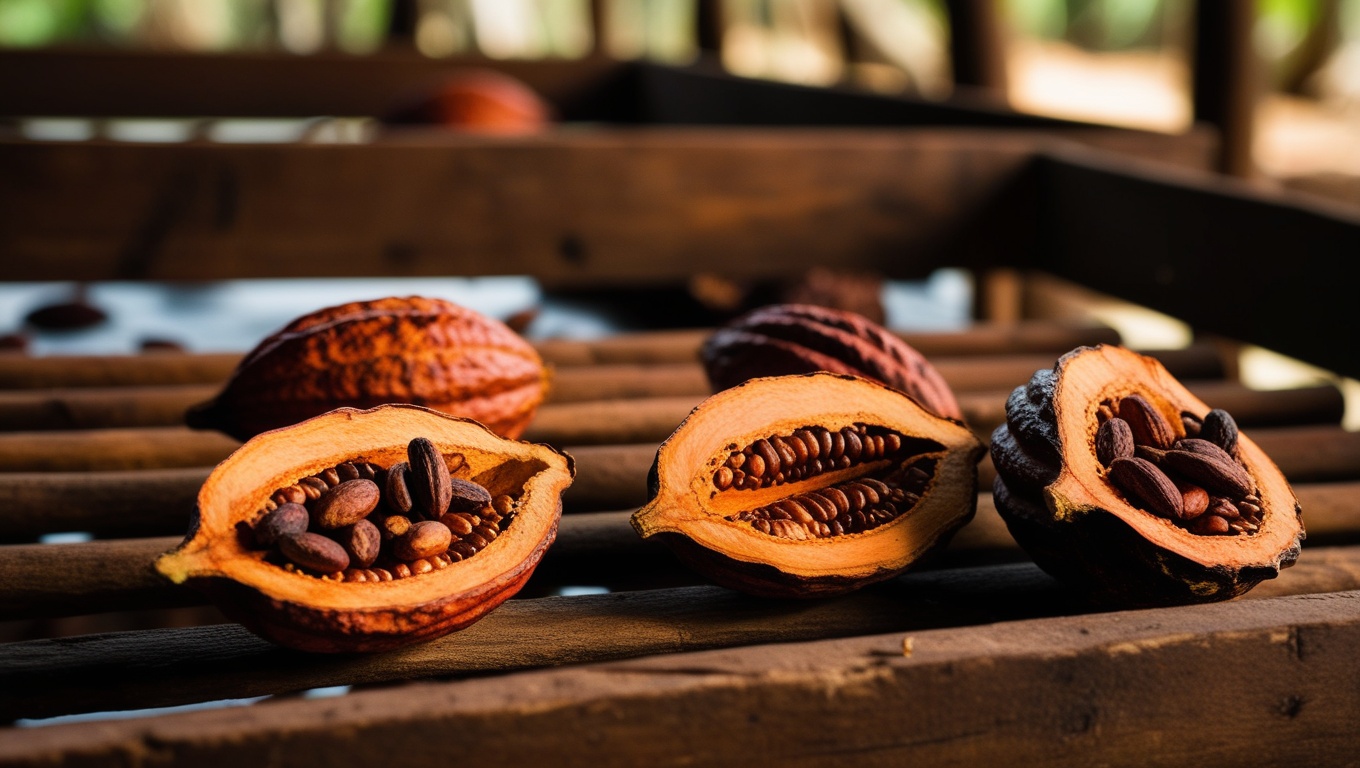
Two West African countries hold the world chocolate market in their hands without drawing the wealth from it. Côte d'Ivoire (2.24 million tonnes of beans in 2022/23) and Ghana (0.65 million tonnes) together produce more than 60% of the world's cocoa, far ahead of Ecuador or Nigeria. Yet, on a chocolate bar, the farmers of this duopoly capture only about 6 to 7% of the final value, compared with nearly half in the 1970s. The 2024 price surge, a world price that tripled to exceed 7,000 USD per tonne, with a peak at 11,530 USD/t on 13 June, did not resolve this paradox: it exposed its roots. For this rise reflects above all a shortage, that of a region which has lost a quarter of its harvest, a forest in retreat and 1.56 million children at work for a cocoa whose margin is created elsewhere.
A duopoly that calls the shots on the world market
No agricultural commodity is as geographically concentrated as cocoa. In 2022/23, before the climate shock of the following season, Côte d'Ivoire accounted for 2,241 thousand tonnes of beans and Ghana for 654 thousand tonnes, according to the ICCO. Together, these neighbours exceed 60% of world production, a share that no other basin comes close to challenging: Ecuador (454 kt), Nigeria (315 kt), Cameroon (270 kt), Brazil (220 kt) and Indonesia (160 kt) share the rest far behind. This concentration gives the West African duopoly considerable market power, but also a rare exposure: when its harvests waver, the entire world price of chocolate races ahead.
This hyperconcentration has a strategic consequence that the aggregate statistic conceals. A cartel of two neighbouring countries, controlling more than three fifths of a global commodity, in theory has bargaining leverage that few agricultural commodity producers possess. Oil has OPEC; cocoa long had no equivalent, leaving West African beans to be sold at the price of a futures market set in London and New York, far removed from the orchards. The creation in 2018 of the joint initiative between Abidjan and Accra, then the introduction of the Living Income Differential in 2020, marks an attempt to convert this dominance of volumes into power over prices. The result remains modest, but the logic is sound: without coordination, two indispensable suppliers remain price takers; with coordination, they could finally become price makers.
A climate and sanitary shock that made the harvest collapse
The demonstration of this fragility came from the 2023/24 season. Hit by excessive rains, fungal diseases and the swollen shoot virus, Côte d'Ivoire saw its production fall to 1,674 thousand tonnes, a decline of nearly 24% in a single season. Ghana followed the same slope, from 654 to 530 kt. This is not a mere weather accident: ageing orchards, often planted several decades ago, and the spread of swollen shoot weigh structurally on yields, which fell to 0.39 tonne per hectare in 2023/24 in Côte d'Ivoire. The recovery expected in 2024/25 (around 1,850 kt for Côte d'Ivoire, 600 kt for Ghana) does not bring production back to its pre-crisis level.
The transmission mechanism deserves to be detailed, for it sheds light on why the crisis is lasting and not fleeting. Swollen shoot is an incurable viral disease: the only known response consists in uprooting and replanting the contaminated plots, a cycle that deprives the grower of harvest for three to five years, the time for the young cocoa trees to come into production. A farmer who captures only 6 to 7% of the final value has neither the cash flow nor the incentive to sacrifice several seasons of income to clean up his orchard. The weakness of income thus turns into an inability to invest in regeneration, and the inability to regenerate in turn fuels the collapse of yields. The 2023/24 shock is not an isolated stroke of bad luck: it is the deferred bill of two decades of underinvestment in orchards reaching the end of their cycle.
The tripling of prices: an apparent windfall, a real shortage
The West African supply deficit produced an unprecedented price movement. The world price of cocoa, still at 2,369 USD/t in 2022, jumped to 3,258 USD/t in 2023 then to 7,391 USD/t in 2024, before holding at 7,788 USD/t in 2025: a tripling in two years. On the London futures markets, the historic peak of 13 June 2024 even reached 11,530 USD/t. From a distance, such a surge looks like a boon for growers. Up close, it tells the opposite: a higher price on far fewer beans, and a value that climbs the chain without descending to the field.
Administered prices: why the surge does not pass through to the field
The gap between the world price and the grower's income stems from an institutional mechanism specific to West African cocoa. In both countries, the farm-gate price is not free: it is set at the start of the season by a regulator, the Conseil du Café-Cacao in Côte d'Ivoire, COCOBOD in Ghana. For 2024/25, this guaranteed price was raised to 1,800 FCFA/kg in Côte d'Ivoire (about 2.89 USD/kg) and to 48,000 GHS per tonne in Ghana, a spectacular Ghanaian increase of 129% compared with September 2023. These increases are real and significant, and they attest to a public will to better remunerate growers. But because they are set before the surge in world prices, they capture only a fraction of the speculative rise: the grower sells at a price decided months earlier, while the value continues to appreciate on the London and New York futures markets, out of his reach.
This forward-selling mechanism, long presented as protection against volatility, turned against the two countries at the precise moment when prices were soaring. The Ivorian and Ghanaian regulators sell a large part of the harvest in advance, sometimes more than a year before the season, at prices negotiated when the market was still around 2,500 to 3,000 USD/t. When the price tripled, they had to honour these contracts at levels that had become derisory, leaving most of the added value to traders and processors. The hedging, designed to smooth out bad years, thus amputated the best price year in the history of cocoa. It is a brutal reminder that a poorly calibrated risk-management device can cost more than it protects, and that such a trade-off is only well steered with up-to-date market and production data.
The device meant to correct rural poverty illustrates the same limit. In 2020, Côte d'Ivoire and Ghana jointly introduced a Living Income Differential of 400 USD per tonne, a premium intended to bring producers closer to a decent income. Four years later, the account does not add up: in 2024, Ivorian producers were still receiving only 53% of the CIF price, the promise of a living income remaining unfulfilled. Between the world price and the farm-gate price come the intermediaries, logistics costs and the time lag of administered prices.
The real paradox: 60% of production, less than 7% of value
If one goes back up the whole chain, from pod to bar, the imbalance becomes staggering. Of the final value of a chocolate sold in Europe or North America, West African producers recover only about 6 to 7%, according to the Cocoa Barometer 2022 and work published in Frontiers in Sustainable Food Systems. In the 1970s, this share was close to 50%. In half a century, wealth has therefore migrated towards processing, manufacturing and distribution, all located off the continent, while the producing countries remained confined to supplying raw material. It is not the scarcity of cocoa that has reduced growers' share, since the duopoly remains indispensable, but the very structure of a chain where each downstream stage adds a margin that the upstream never sees.
The Ivorian-Ghanaian duopoly produces more than 60% of the world's cocoa, but its growers capture only 6 to 7% of the value: dominating volume has never been enough to master wealth.
Local processing, the missing link of added value
The key to this missed capture has a name: processing. In 2023/24, Côte d'Ivoire ground 777 thousand tonnes of beans locally out of a production of 1.76 million tonnes, a grinding share that is progressing but remains a minority. Above all, the nature of exports betrays the country's place in the chain: 97% of cocoa exports are raw beans or semi-finished products (butter, powder, paste), and only 3% finished chocolate. Yet it is precisely at the finished-product stage that the margin is concentrated. As long as the country exports raw material and semi-finished goods, it also exports, mechanically, most of the value it could retain.
The obstacles must be named so as not to turn an industrial objective into an incantation. Manufacturing finished chocolate for export, and not merely grinding beans, requires a cold chain mastered throughout the logistics, reliable and cheap electricity, access to the Northern consumer markets protected by escalating tariff barriers, and brands capable of competing with players established for more than a century. European customs duties illustrate the trap: raw beans generally enter duty-free, while finished chocolate faces higher taxation, a tariff escalation that discourages precisely the move up the value chain. Documenting these obstacles finely, energy cost, logistics reliability, structure of customs duties by product, is a prerequisite for any credible strategy: the processed share is not raised by decree, but by lifting one by one the locks that only a quantified analysis brings to light.
The hidden price: the retreating forest
The weak value capture has an ecological corollary. For want of sufficient yields on existing plots, the expansion of cocoa growing was long carried out at the expense of the forest. In Côte d'Ivoire, the work of Renier and his co-authors (World Resources Institute) attributes to cocoa 360,000 hectares of forest loss in protected areas alone between 2000 and 2020, or 37.4% of total deforestation in those areas. The comparison with Ghana (26,000 hectares in protected areas over the same period and the same scope) underscores the intensity of the Ivorian phenomenon. Definitions and periods vary from one source to another, and the exact scale remains debated, but the direction is constant: cocoa has been a major driver of West African forest retreat.
The human cost: 1.56 million children in the plantations
The value paradox has a human face that price statistics never show: that of children. The reference survey conducted by NORC (University of Chicago) for the Bureau of International Labor Affairs of the U.S. Department of Labor, on the 2018/19 season, counted about 1.56 million children engaged in cocoa-related work in the two countries, of whom nearly 790,000 in Côte d'Ivoire and 770,000 in Ghana. More serious still, about 1.48 million of them, or 95%, are exposed to hazardous work: carrying heavy loads, using machetes, contact with pesticides. In the cocoa zones, more than a third of the children of producing families in Côte d'Ivoire, and more than half in Ghana, took part in cocoa growing. These figures are not a marginal deviance of the sector: they are a structural symptom of it.
The link with income is direct and documented. A household that captures only 6 to 7% of the value, and that sells at an administered price set before the surge, does not have the means to hire adult labour for the harvest, the pod-breaking and the transport of the beans. Child labour then fills the gap in cash flow and workforce. Two decades of voluntary commitments by the private sector, starting with the Harkin-Engel protocol of 2001, have not made the phenomenon recede decisively, precisely because they treated the symptom, child labour, without correcting the cause, the poverty of the grower. As long as the sharing of value remains so unbalanced, remediation plans will remain patches on an open wound.
The vicious circle of poverty, childhood and land
Insufficient income, child labour and deforestation are not three separate problems: they feed one another. Because the producer captures only a tiny share of the value, poverty persists in the cocoa zones, and this poverty fuels both child labour in the plantations and the cultivation of new forest plots. In Côte d'Ivoire, about 12% of producers still farm in classified forests, a situation that now directly threatens their access to the main outlet. The European regulation on deforestation-free products (EUDR) indeed conditions entry into the Union market on proof that a bean does not come from land deforested after 2020. For millions of growers, traceability is no longer an ethical option: it is a condition of commercial survival.
The calendar adds urgency to the stakes. After several postponements, the EUDR applies to large and medium operators from 30 December 2026, with a reprieve until 30 June 2027 for micro and small enterprises. Past these deadlines, no bean will be able to enter the European market legally without proof of geolocation attesting to the absence of deforestation. The Union is the leading outlet for Ivorian-Ghanaian cocoa: a lack of traceability will not translate into a marginal fine but into a market closure, and it will strike first the smallest producers, those who have neither the digital tools nor the support to map their plots. The regulatory constraint thus risks, for want of massive public support, excluding precisely the most vulnerable instead of protecting them.
- The pressure on income. A value share of only 6 to 7% and a farm-gate price that captures only 53% of the CIF price leave the grower with no margin to invest in replanting or inputs.
- The pressure on childhood. For want of cash flow to hire adult labour, 1.56 million children work in Ivorian-Ghanaian cocoa, of whom 95% at hazardous tasks.
- The pressure on the forest. For want of yield gains (0.39 t/ha in 2023/24), the extension of areas remains the only adjustment variable, at the expense of protected areas.
- The regulatory pressure. The EUDR (from end 2026) and the regional ARS-1000 standard require plot-by-plot traceability; without it, access to the European market closes, precisely for the most vulnerable producers.
The gender angle: women's invisible cocoa
As in the rest of West African agriculture, a significant part of cocoa work, weeding, pod-breaking, drying, sorting of beans, rests on women, while they remain largely shut out of land ownership, cooperative membership and access to credit. Yet most of the sector's mechanisms, the living income premium, certification, quality premiums, pass through cooperatives and land titles, that is, through channels from which women are often excluded. The raising of farm-gate prices and the Living Income Differential therefore benefit first the holders of registered plots, mostly men, while the female workforce remains invisible in the statistics as in the distribution of gains. Without data disaggregated by sex, this gap remains impossible to target and correct. It is an angle that CRAD has carried at the regional level with the WOCEWA project, which built a gender equality index in the sustainable energy SMEs of the twelve ECOWAS countries: the same disaggregated measurement method is directly transposable to the cocoa sector.
What averages hide: two million growers, not a windfall
The spectacular figure of a world price at 7,000 USD per tonne masks a dispersed human reality. Behind the Ivorian sector, there are about 1.2 million small producers (nearly 2 million with Ghana), on plots of 1.5 to 5 hectares. For them, the world average means nothing: they sell at an administered price set before the surge, suffer the levy of intermediaries and, above all, have lost part of their volume. A higher price on fewer beans does not mechanically translate into a better net income per hectare, all the more so as the ageing of orchards and swollen shoot eat into yields. The media narrative of the 'cocoa windfall' dissolves as soon as it is disaggregated: what the futures market earns is not what the grower earns.
The CRAD angle: data as a condition of market access
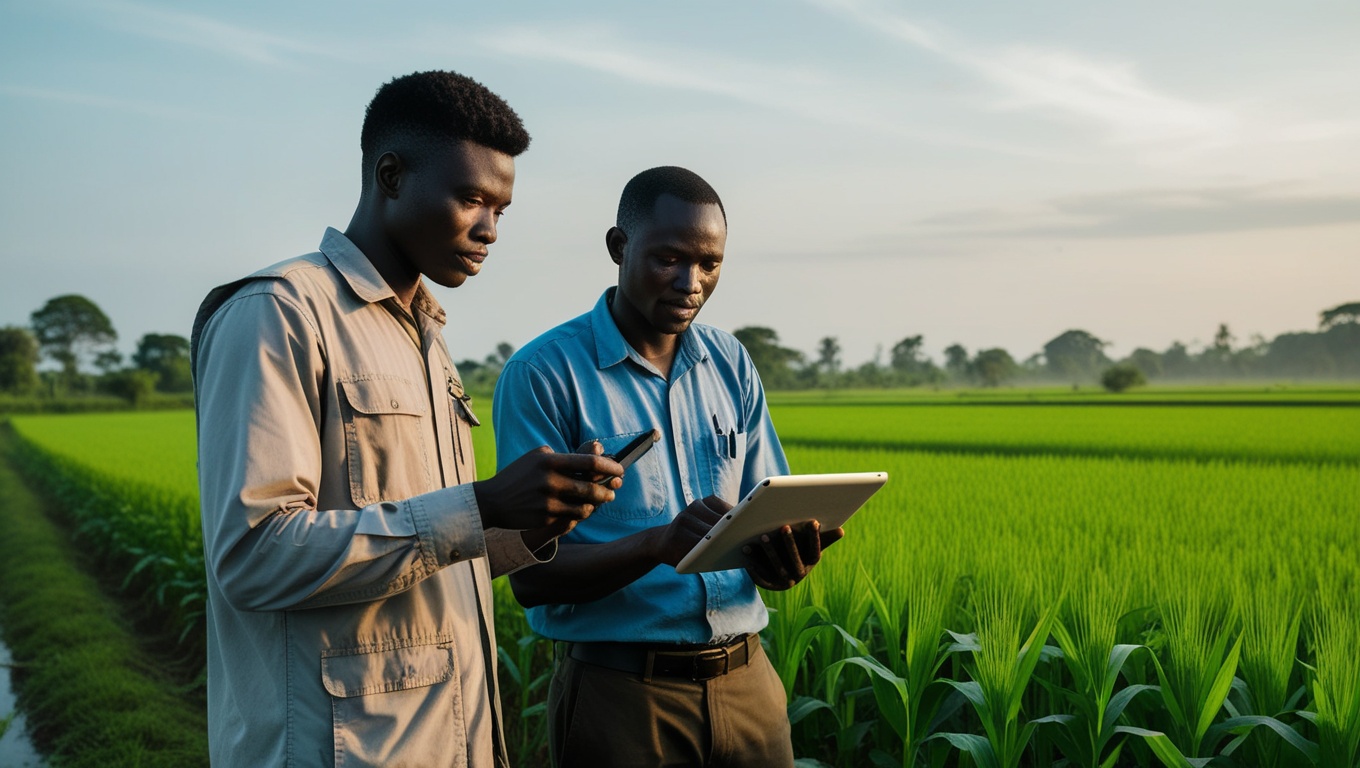
The cocoa case sharply illustrates CRAD's speciality: linking field data to public decision. Documenting the real sharing of value, the share actually processed locally, the prevalence of child labour by zone and the forest footprint plot by plot is no longer an academic exercise; it has become a condition of market access. The traceability required by the EUDR and the ARS-1000 standard entails geolocating plantations, dating clearances and tracking bean flows from the pod to the exporter. Yet these information systems are largely lacking today, even as the regulatory calendar tightens and the end-2026 deadline approaches.
This is precisely CRAD's field of intervention alongside states, cooperatives and donors: designing monitoring and evaluation systems, geolocating plots through digital collection and evaluating the real impact of price policies, from the Living Income Differential to farm-gate price increases, on households' net income and on the resort to child labour. Measuring, disaggregating by sex and by zone, then renewing these data season after season, means giving decision-makers the means to transform an imposed windfall, dictated by world prices and Northern buyers, into a mastered added-value strategy. Without this compass, the sector will remain exposed: dependent on a price it does not set, on a forest it cannot manage to protect and on a regulation it is not equipped to satisfy.
Key takeaways
- Côte d'Ivoire (2.24 Mt in 2022/23) and Ghana (0.65 Mt) alone produce more than 60% of the world's cocoa, but capture less than 7% of the value of chocolate.
- The climate and sanitary shock of 2023/24 made the Ivorian harvest fall by 24% (to 1.67 Mt), triggering a tripling of the world price up to 7,391 USD/t in 2024.
- Farm-gate prices are administered and set before the surge: in 2024, the Ivorian producer was still receiving only 53% of the CIF price, despite the Living Income Differential of 400 USD/t.
- Rural poverty fuels the labour of 1.56 million children in Ivorian-Ghanaian cocoa, of whom 95% at hazardous tasks (NORC, 2018/19).
- Value is created at processing (97% of Ivorian exports are raw or semi-finished) and the EUDR closes the European market to untraced beans from end 2026.
Recommendations for West African decision-makers
- Make local processing a quantified industrial priority: raise the ground share and above all the share of finished chocolate exported, today at 3%, by lifting the documented locks (energy, logistics, tariff escalation) to retain on the continent the margin that escapes it.
- Build without delay the traceability and plot geolocation systems required by the EUDR (deadline end 2026) and the ARS-1000 standard, by financing support to the smallest producers so that regulation does not exclude them from the market.
- Evaluate the real impact of price policies (Living Income Differential, farm-gate price) on net income per hectare and on the resort to child labour, and not on the displayed price alone, by correcting the levy of intermediaries.
- Invest in orchard regeneration and the fight against swollen shoot to raise yields (0.39 t/ha), in order to durably decouple production from expansion onto new forest land.
- Strengthen the coordination of the Ivorian-Ghanaian duopoly in negotiation, hedging and price smoothing, to convert 60% of world production into real market power for the benefit of growers.
- Condition public and donor support on data disaggregated by sex and geolocated, collected season after season, to target investment where poverty, child labour and forest pressure are strongest.
Sources
- ICCO, Quarterly Bulletin of Cocoa Statistics, Vol. LI No.1 (production by country 2022/23-2024/25)
- ICCO, May 2026 Quarterly Bulletin of Cocoa Statistics (world production, grindings and deficit)
- USDA FAS GAIN, Côte d'Ivoire Cocoa Sector Overview 2025 (production, grinding, farm-gate price, LID, deforestation)
- USDA FAS GAIN, Ghana Cocoa Sector Overview 2025
- IMF / World Bank, Global price of Cocoa (FRED PCOCOUSDA series, annual world price)
- COCOBOD via GhanaWeb, producer price 2024/25 (48,000 GHS/t)
- Business & Human Rights Resource Centre, Living Income Differential of 400 USD/t (Côte d'Ivoire and Ghana)
- Cocoa Barometer 2022, executive summary (income and producers' value share)
- NORC at the University of Chicago / U.S. Department of Labor, Assessing Progress in Reducing Child Labor in Cocoa (2018/19 season)
- Renier et al., Cocoa plantations are associated with deforestation in Côte d'Ivoire and Ghana (PMC / WRI)
- Frontiers in Sustainable Food Systems, A Living Income for Cocoa Producers in Côte d'Ivoire and Ghana?
- European Commission, regulation on deforestation-free products (EUDR), application calendar
- Wikipedia, Cocoa crisis (2020s), synthesis of record prices 2024-2025 (source ICE Futures)