Agricultural yields: the gap with the potential remains considerable
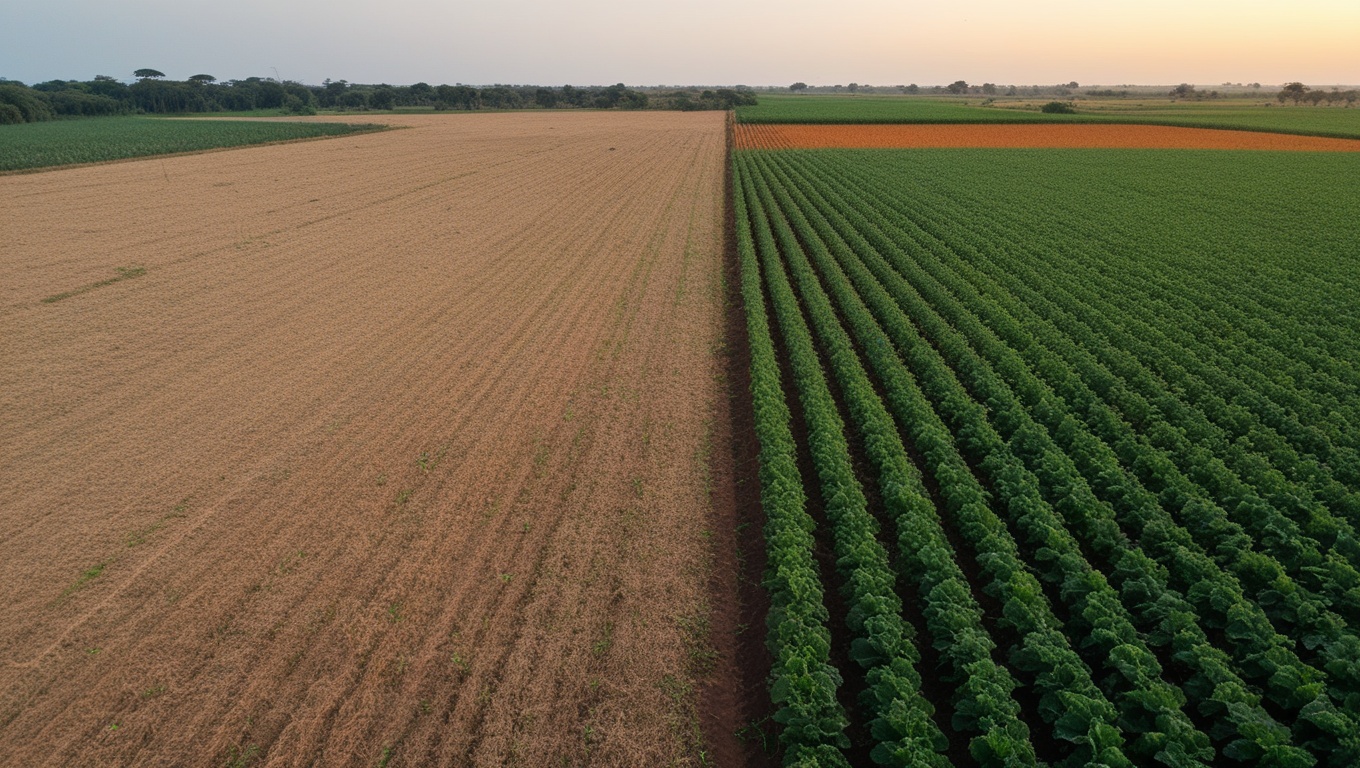
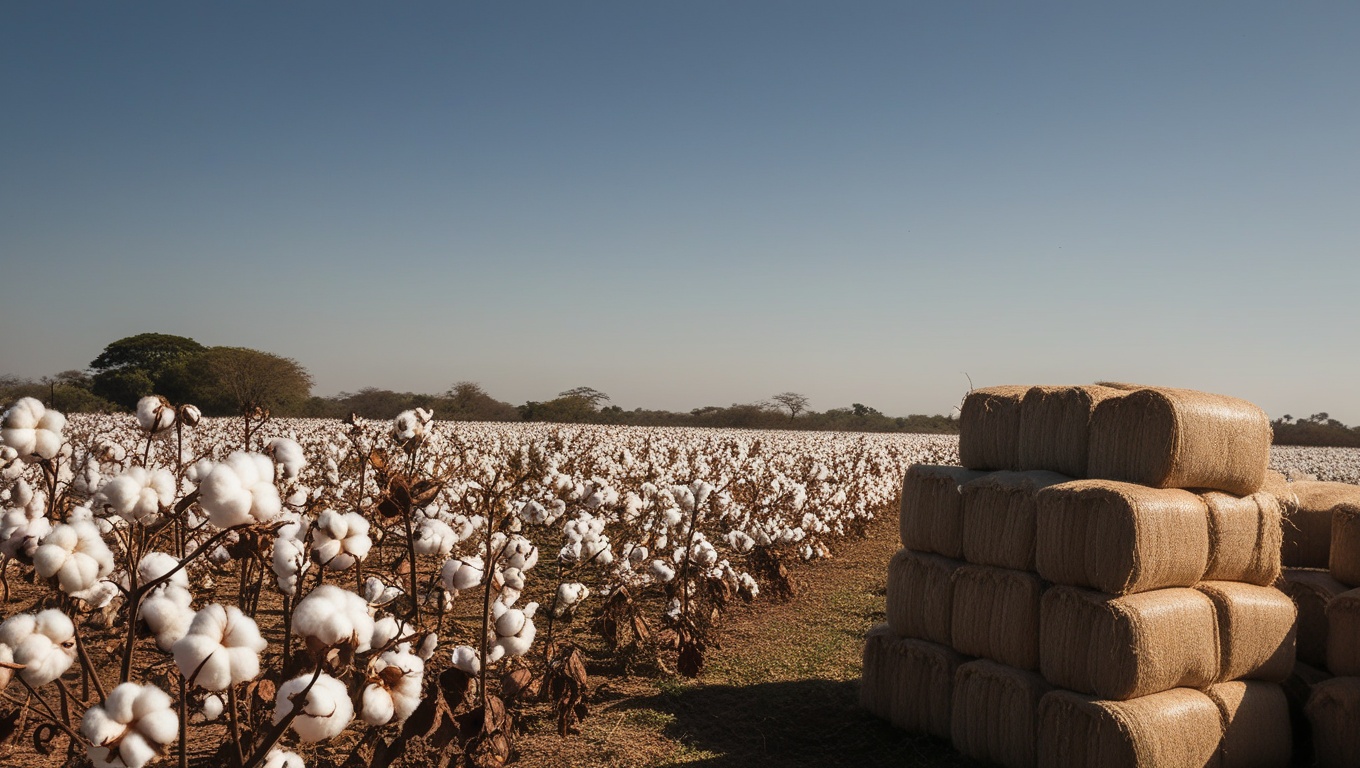
West Africa produces, but far below what it could produce. For maize, the leading cereal on the continent, the gap between observed yields and agronomic potential reaches 70 to 90 % according to the Global Yield Gap Atlas: fields today deliver only 10 to 30 % of what they are capable of yielding. This is not just one statistic among others. At constant population and area, it is the largest reserve of food and rural income in the region, and it lies almost entirely in the hands of public policy. The question is therefore not whether West Africa can feed its demographic growth, but whether it decides to harvest what it leaves in the ground today.
One region, sharply contrasting trajectories
World Bank data for 2023, the most recent year comparable across all countries, reveal a striking dispersion of cereal yields. At the top, Ghana peaks at 2,688 kg/ha, followed by Côte d'Ivoire (2,398 kg/ha) and Senegal (2,192 kg/ha). At the other extreme, Niger records 489 kg/ha, a ratio of 1 to 5.5 between the first and the last. Benin, at 1,127 kg/ha, sits below the regional average (around 1,600 kg/ha) and does not escape the structural vulnerability of the region. What is striking about this ranking is that it does not overlap with the map of rainfall: countries with comparable climates appear at both ends. The hierarchy of yields therefore tells less a story of nature than a story of policies, institutions and access to the means of production. This is good news, because policies, unlike climate, are decided.
Ghana took off, Benin stagnated: the demonstration by the facts
Comparing two neighbours with similar agro-ecological conditions is the best antidote to fatalism. Between 2010 and 2023, Ghana raised its cereal yield from 1,814 to 2,688 kg/ha, an increase of nearly 48 % in thirteen years. Over the same period, Benin remained stuck around 1,300 to 1,500 kg/ha, with no upward trend, before falling to 1,127 kg/ha in 2023. Ghana's acceleration is not a fluke of rainfall: it takes hold from 2017-2018 and coincides with the rollout of the "Planting for Food and Jobs" programme, which combined targeted fertilizer subsidy, improved seeds and local advice. The signal is clear: what distinguishes the two trajectories is not nature, but the intensity and consistency of public effort.
The Ghanaian lesson is not a model to copy identically, but a principle: yield is built through a consistent, targeted policy sustained over time, not through announcements. It also calls for vigilance, because an input subsidy is only useful if it remains fiscally sustainable and well targeted, otherwise it costs dearly for an effect that fades. This is precisely the trade-off that reliable data help illuminate: knowing what each public franc spent on fertilizer or irrigation actually returns in kilos of cereals.
Benin illustrates the cost of this stagnation. The 2023-2024 season recorded the lowest maize yield since 2018 (992 kg/ha according to INSAE/MAEP), and the rebound to 1,356 kg/ha in 2024 only brings the country back to its usual average. There is therefore no productivity breakthrough in sight, only an oscillation at the mercy of the rains. As long as yield remains suspended on rainfall, every bad season is paid for in imports and food insecurity.
The shortfall can be quantified. Had Benin simply followed Ghana's trajectory over the period (an increase of around 48 %), its 2023 yield would be close to 1,780 kg/ha instead of 1,127, that is nearly 60 % more cereals on the same land, without clearing a single hectare. The calculation is illustrative, but it gives the order of magnitude of what thirteen years of stagnation have cost, in food as in rural income.
Today, West African fields deliver only 10 to 30 % of what they could produce. The bulk of the region's food reserve still lies ahead of us, in the ground.
Why the gap persists: three locks, all releasable
There is nothing mysterious about the yield gap. It breaks down into three manageable factors, which agronomy has long known and which the high-performing countries have methodically removed.
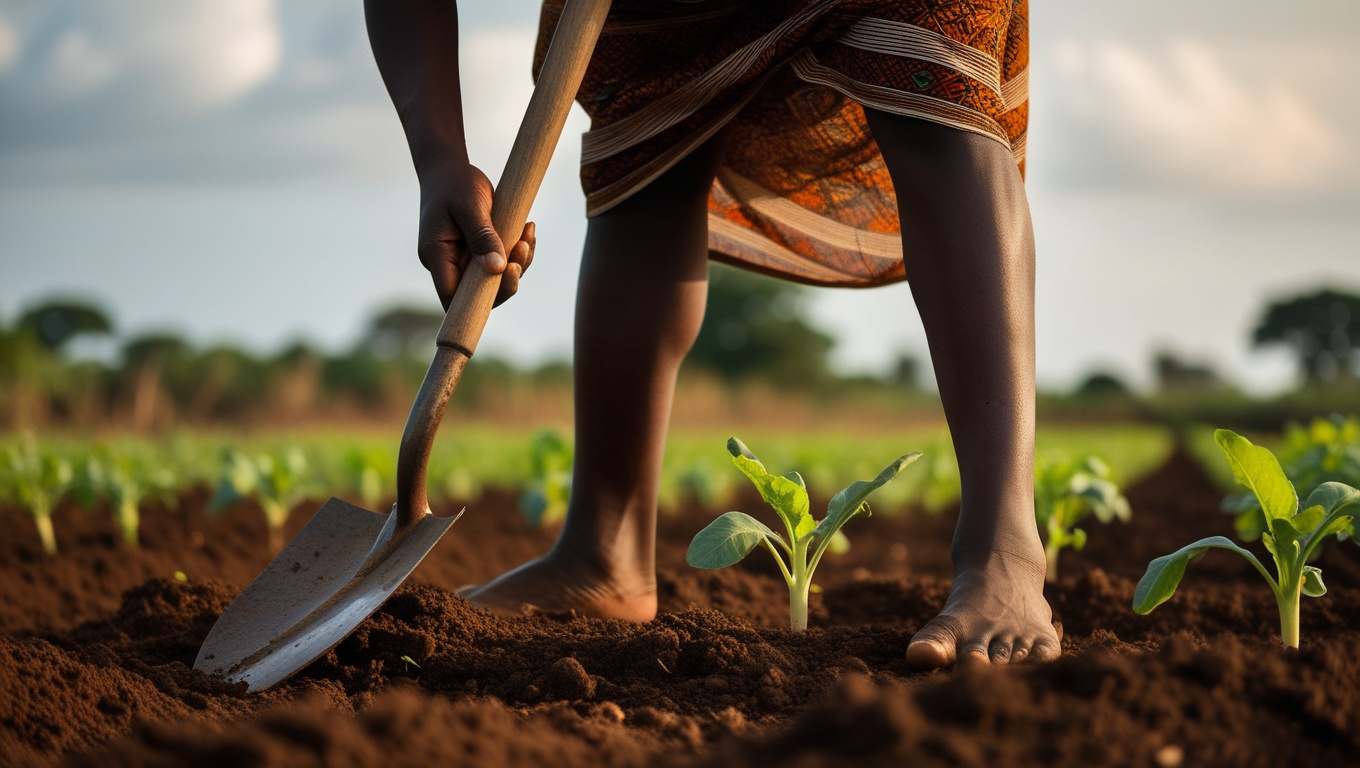
- Fertilization. West Africa is capped at around 20 kg of fertilizer per hectare, far below the target of 50 kg/ha that African heads of state set themselves as early as the 2006 Abuja Declaration, and bearing no comparison to the world average (around 135 kg/ha). Yet on often depleted soils, well-dosed fertilizer is the first multiplier of yield.
- Water. Less than 5 % of cultivated land in Sub-Saharan Africa is irrigated, compared with nearly 40 % in South Asia (FAO). Yield therefore remains hostage to the rains: where water control progresses, performance follows, as shown by Ivorian irrigated rice projected at 3.0 t/ha in 2024-2025 (USDA).
- Seeds and advice. The limited use of improved seeds and the scarcity of local agronomic advice prevent good practices from spreading. This is precisely the triptych (fertilizer, seeds, advice) that Ghana activated.
Where to start: a sequence, not a wish list
Faced with three locks, the temptation is to do everything at once; experience instead suggests sequencing. Water comes first, because without it fertilizer remains a bet on the rain: small-scale irrigation, water harvesting and drainage secure the foundation. Fertilizer and improved seeds follow, once they can express their potential on soils whose moisture is controlled. Local agronomic advice accompanies the whole, because a poorly calibrated dose or a poorly timed sowing wastes the subsidy. This sequence is not absolute, and it varies from one area to another, but it recalls an often forgotten truth: the effectiveness of a lever depends on the order in which it is activated, and therefore on a local diagnosis that only field data can establish. Distributing fertilizer where water is lacking, or irrigating where advice is missing, is spending without harvesting.
Measuring the gap to close it better
The achievable potential in a regional context stands at around 3,000 kg/ha. Compared with Benin's current yield (1,356 kg/ha in 2024) and the 2023 West African average (about 1,600 kg/ha), the gap to close exceeds 1,600 kg/ha, more than current production itself. In plain terms, there is more harvest to gain than already exists. To aim for cereal self-sufficiency, Sub-Saharan Africa must raise its yields by 56 to 60 kg/ha per year (PNAS, 2024): a demanding but cumulative pace, within reach of a consistent policy, and not an out-of-reach technological leap.
How much the gap costs, how much closing it would yield
The economic calculation clearly leans the same way. Every tonne of cereals not produced locally becomes an imported tonne, paid for in foreign currency and exposed to the volatility of world prices, while the region is already widening its rice bill. Conversely, the levers of yield (better-dosed fertilizer, small-scale irrigation, improved seeds, local advice) are among the public investments with the fastest return in food security and rural income. The real cost is therefore not that of acting, but that of not acting: it is paid every year in imports, in exposure to shocks and in agricultural jobs that are not created. To arbitrate correctly, however, one still needs the plot-by-plot and value-chain-by-value-chain costing that most of the region's agricultural budgets lack today.
A precedent that takes the drama out of the challenge: the Asian green revolution
The challenge may seem dizzying; yet it has already been met elsewhere. From the 1960s onward, Asia more than doubled its cereal yields in a single generation, by combining exactly the triptych that West Africa lacks today: improved seeds, fertilizer and water control, all supported by dense agricultural advice and incentive prices (FAO). The West African challenge is therefore not to invent a solution, but to apply with consistency a proven recipe, adapting it to the soils, crops and family farms of the region. The decisive difference lies less in the available technology than in the duration and coherence of public commitment, exactly what separates Ghana's trajectory from Benin's today.
The cost of inaction: demography does not wait
Yield is not a debate for agronomists: it is a race against demography. The West African population is growing by about 2.7 % per year. At constant yield and limited area, food availability per capita mechanically declines, and the gap is filled by imports. Climate shocks further accelerate the countdown: in 2024, rainfall deficits and Sahelian floods led the FAO to forecast a 700,000-tonne decline in regional cereal production. Concentration worsens the risk, with Nigeria alone accounting for 37 % of regional production, which transmits its hazards to the entire food basin. Every year of stagnant yield turns a domestic reserve into an import bill, at the very moment when the region's rice bill is already widening.
The most underestimated lever: women's access to the means of production
A major part of the yield reserve has a face: that of women farmers. Women carry out a considerable share of West African agricultural work, but have less access than men to secure land, inputs, credit and advice. The FAO quantified the issue long ago: with equal access to productive resources, women farmers would raise their yields by 20 to 30 %, enough to feed tens of millions of additional people (FAO, The State of Food and Agriculture 2010-2011). Reducing the gender gap in access to the means of production is therefore one of the most profitable productivity investments there is, and one of the most neglected, for lack of sex-disaggregated data to target and monitor it. This is an angle the CRAD knows closely, having championed it in the energy sector with the regional WOCEWA project.
What national averages hide
One final point, decisive for action: national figures are averages, and averages mask the essential. Behind a national yield lie considerable gaps between an irrigated plot and a rainfed plot, between a supervised cooperative and an isolated producer, between maize and sorghum which do not carry the same weight from one year to the next. The aggregate indicator AG.YLD.CREL.KG, useful for comparing countries, does not say where to act within a country. This is precisely where the effectiveness of a policy plays out: the same fertilizer or irrigation budget does not produce the same additional yield depending on whether it targets the high-gap areas or the areas already close to their potential. Without fine measurement, at the plot and value-chain level, public investment moves blindly.
This is the conviction that guides the CRAD's work on agricultural value chains: yield data only has value if it is geolocated, disaggregated and renewed season after season. Mapping the gaps by area means turning a national statistic into an investment roadmap, and moving agricultural policy from intention to precision.
Yield does not stop at the field: post-harvest losses
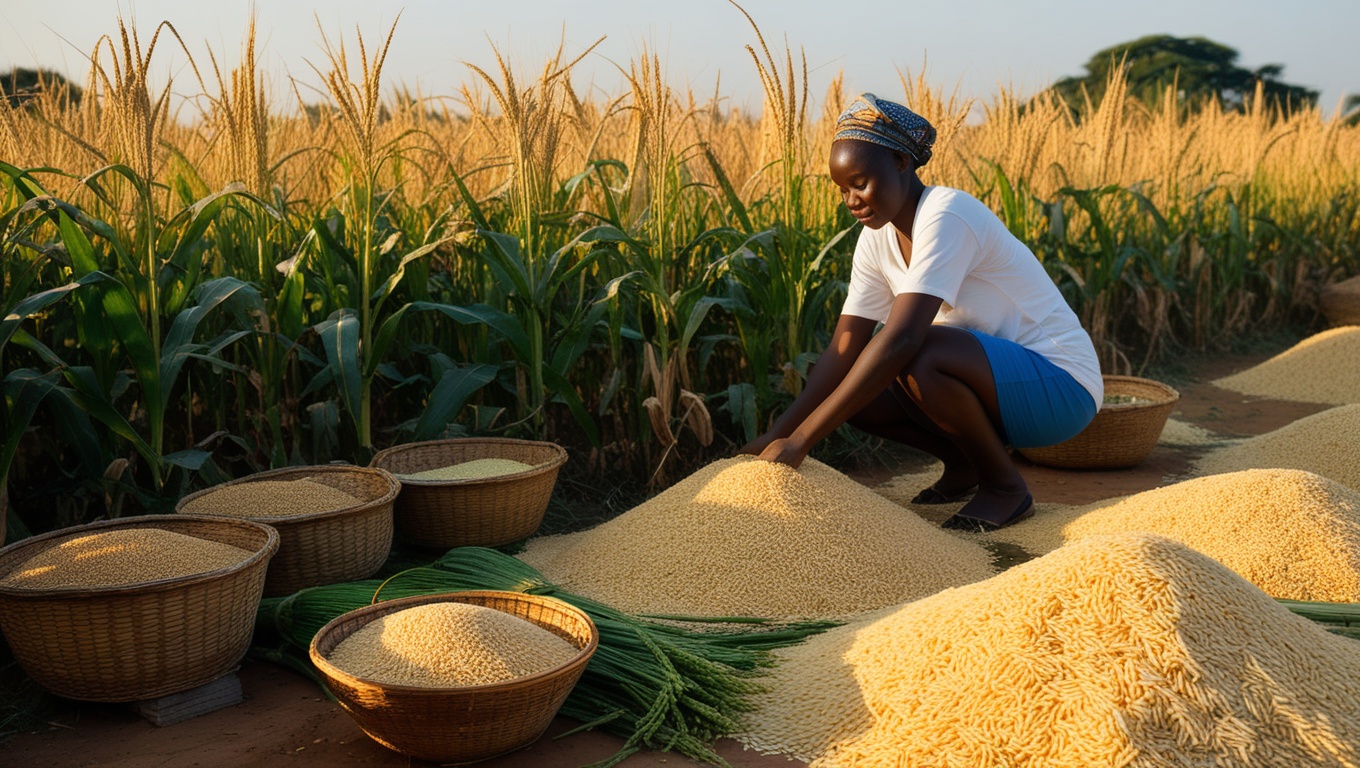
Raising yield only fully pays off if the harvest reaches the plate or the market. Yet a significant share of production is lost between the field and the consumer, for lack of suitable drying, storage and transport. For cereals in Sub-Saharan Africa, the FAO and the APHLIS network estimate these post-harvest losses at around 10 to 20 % of tonnage, sometimes more along the value chain. That reserve can be closed with simple means (drying areas, silos, community storage facilities) and a tracking of losses value chain by value chain. The reasoning deserves to be stated clearly: one point of post-harvest loss avoided is equivalent, in real availability, to one point of yield gained in the field, often at a much lower cost. A serious productivity strategy therefore addresses both ends of the chain, not just the plot.
Fundamentally, the West African yield gap is not an unsolved agronomic problem: science has long known how to produce more on these soils. It is a problem of political consistency and data-driven steering. The countries that progress are those that set a target, sustain the effort over a decade and measure their results where they play out, at the plot. Those that stagnate do not lack potential: they lack a compass. Closing the gap means first deciding to measure it, then never letting it go.
Key takeaways
- West African maize uses only 10 to 30 % of its agronomic potential (a gap of 70 to 90 %, Global Yield Gap Atlas).
- Gaps between countries are massive: in 2023, from Ghana (2,688 kg/ha) to Niger (489 kg/ha), a ratio of 1 to 5.5.
- The gap is not inevitable: Ghana gained +48 % yield in thirteen years while Benin stagnated, under comparable natural conditions.
- Three locks explain most of the lag: fertilizer (20 kg/ha against the 50 targeted at Abuja), irrigation (less than 5 % of land) and access to seeds and advice.
- Closing the gap requires progress of 56 to 60 kg/ha per year, cumulative and measurable, and therefore a consistent policy rather than a technical miracle.
Recommendations to West African decision-makers
- Set an explicit national productivity target, aligned with the 56 to 60 kg/ha/year pace required for self-sufficiency, and track it each season through an enforceable public indicator.
- Finally honour the Abuja target of 50 kg of fertilizer per hectare via targeted subsidies and local agronomic advice that guarantees its efficiency, on the model of what made Ghana take off.
- Invest as a priority in water control (small-scale irrigation, water harvesting, drainage), the only factor capable of durably decoupling yields from rainfall variability.
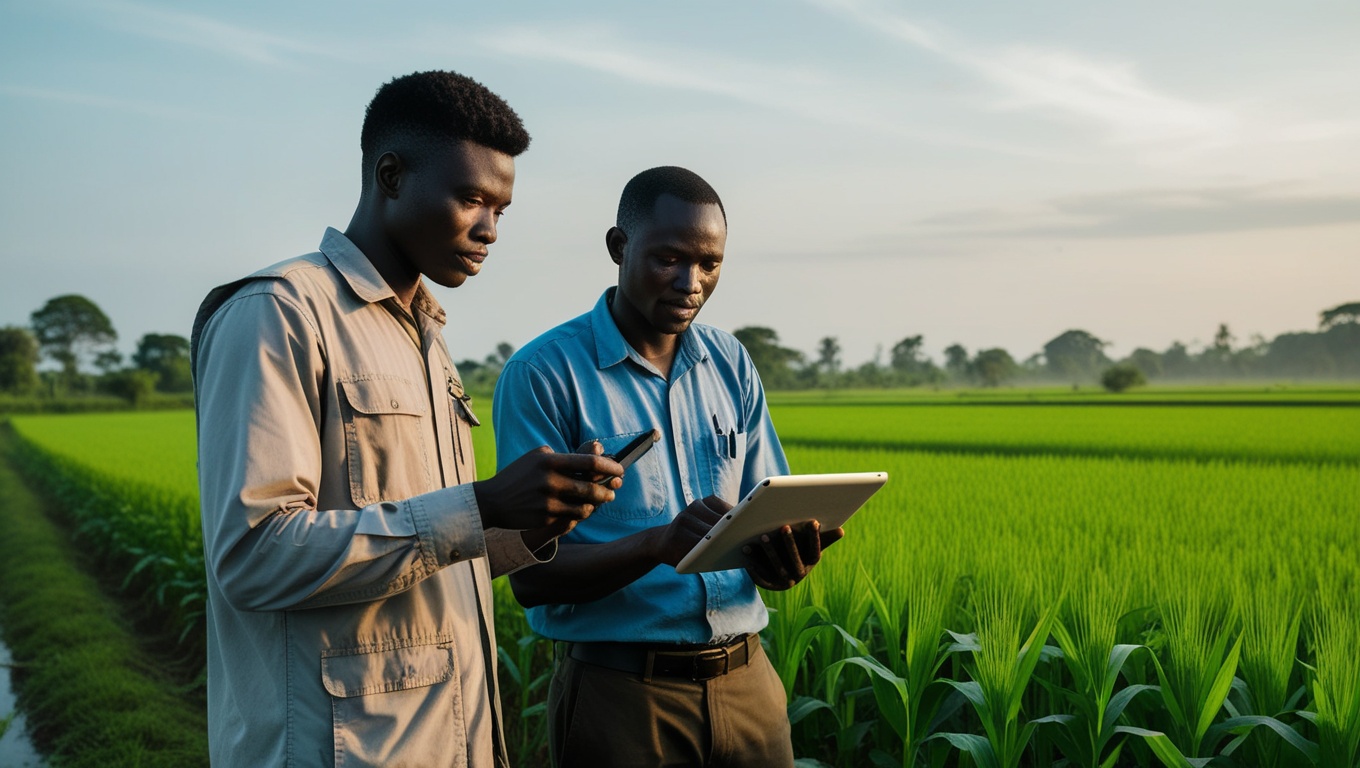
- Build plot-level yield measurement systems (geolocated season surveys, digital data collection) to map gaps within each country and concentrate investment where the reserve is largest.
- Pool improved seeds and climate early-warning systems at the ECOWAS scale, in order to reduce dependence on Nigeria, which concentrates 37 % of regional production and therefore of the risk.
- Condition agricultural budgets on result data, not means data: move from tracking inputs distributed to tracking the yield actually obtained, area by area.
Sources
- World Bank, indicator AG.YLD.CREL.KG (Cereal yields)
- World Bank, fertilizer consumption (AG.CON.FERT.ZS)
- Abuja Declaration on Fertilizer for an African Green Revolution (African Union, 2006)
- Global Yield Gap Atlas (GYGA), Wageningen University & Research
- APHLIS, African Postharvest Losses Information System (cereal post-harvest losses)
- FAO, The State of Food and Agriculture 2010-2011 (women in agriculture)
- PNAS, Prospects for cereal self-sufficiency in sub-Saharan Africa (2024)
- FAO, West Africa cereal production 2024
- USDA FAS, Côte d'Ivoire Grain and Feed (rice 2024-2025)
- Benin, official agricultural statistics 2023-2024 (INSAE/MAEP)
- Ghana, Planting for Food and Jobs (Ministry of Food and Agriculture)